Rum stierln – the media project starts in Dießen! Register now and join in!
THE WORKSHOP
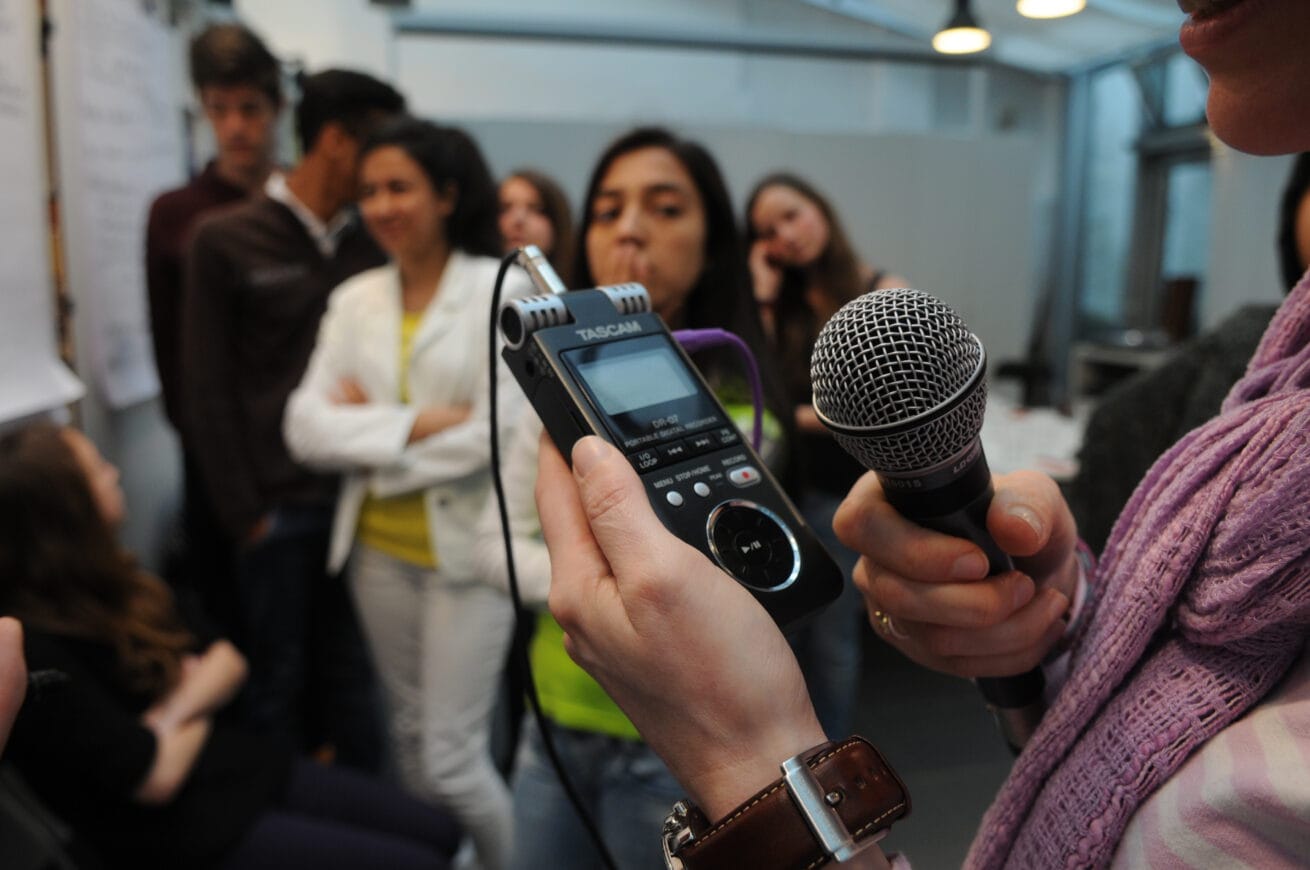
In this project we work like reporters and detectives. We poke around and want to find out more about the history of Dießen, the Ammersee, the people, the houses, the fishermen and everyone else who is just standing around somewhere.
In our courses you will learn how to ask the right questions, make, cut and edit recordings. We also show you how to post your stories and put them online.
Radio and music production professionals will show you cool tips and tricks to get the sound right.
WHO CAN TAKE PART?
14 young people aged 12 to 18
WHAT DO YOU NEED?
No previous knowledge. Just a desire to try things out.
COSTS?
Participation is free of charge.
DATES
July and August 2021
Between 2 p.m. and 5 p.m. each day and by arrangement.
LOCATION
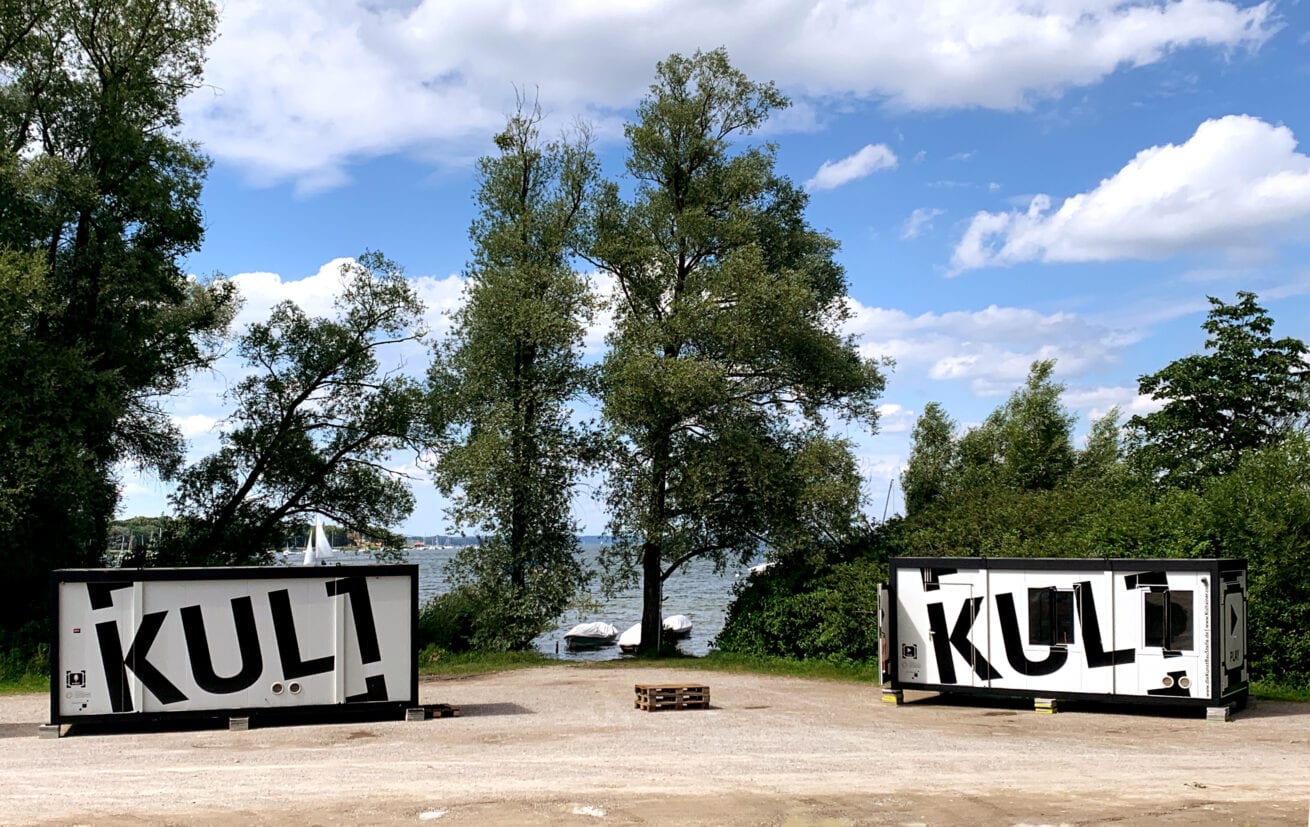
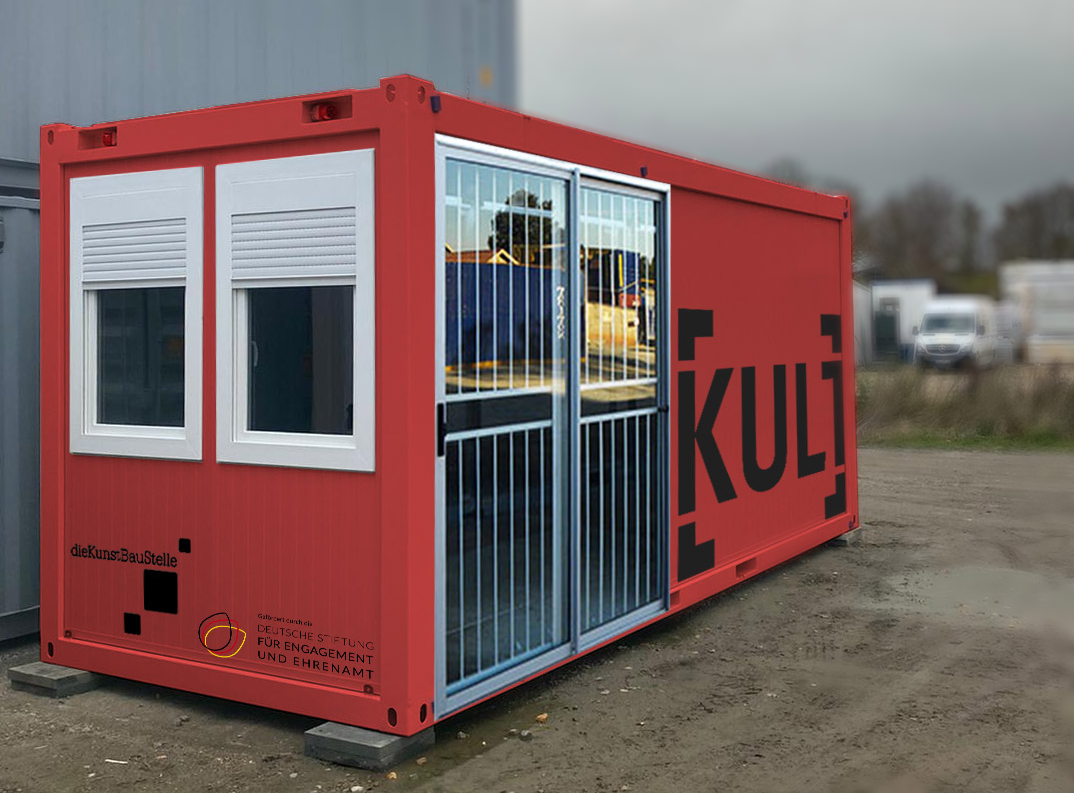
The courses take place at the Kultainer in Dießen. The Kultainers are located at the MTV car park opposite the skate park in Jahnstraße, Dießen.
REGISTRATION
E-Mail info@Kultainer.com
ORGANISER
dieKunstBauStelle e.V., Landsberg am Lech, www.dieKunstBauStelle.de
www.Kultainer.com
FUNDING
Kultur macht stark – Bündnisse für Bildung |Federal Ministry of Education My Country – Time for the Future | Turkish Community in Germany
#cultainer #diekunstbaustelle #landkreislandsberg #diessen #ammerseewestufer #rumstierln #kulturmachtstark
Ein ungewöhnliches Projekt soll frischen Wind in die Kulturszene der Ammersee-Region bringen
Von Laura Höring, Dießen
Auf einem eigentlich unscheinbaren Parkplatz am Ammersee-Südufer startet dieser Tage ein ungewöhnliches Kulturprojekt: Vier Container in L-Form bilden zusammen mit dem Seeufer einen idyllischen Ort mit gut 150 Quadratmeter Innenraum, der sonst von parkenden Autos belegt ist.
Ausgestattet als mobiles Produktionsstudio für Video, Ton und Redaktion dienen sie als nun Anlaufstelle für kreative Aktivitäten aller Altersgruppen.
Die Initiative des Landsberger Kulturvereins “dieKunstBauStelle” und des Kultur-Referats der Marktgemeinde will so frischen Wind in die Dießener Kulturszene bringen.
“Urban Gartln”, “Rum Stierln” and other projects enrich the “Diaßner Kultua”.
Landsberg/Dießen: The Kultainers have arrived in Dießen and anyone who thinks it is a continuation of what was initiated with the Kultainer in Geltendorf is mistaken. Workshops for theatre, editorial work, cinema, lectures and handicrafts form a diverse framework for a summer programme around the Kultainers.
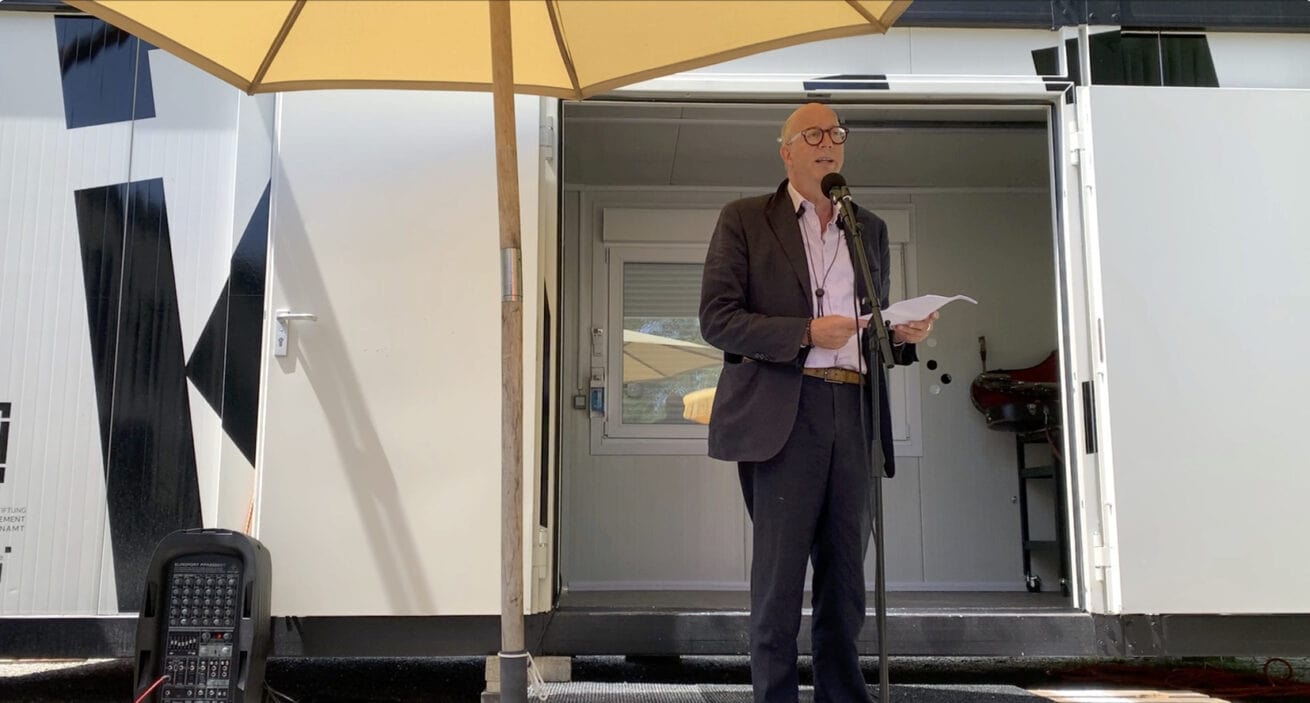
The aim of the Kultainer became clear in the welcoming speech by Mayor Sandra Perzul.
For the kick-off, cultural officer Michael Lutzeier gave a lecture on “the Diaßner Kultua”. In his historical excursion, the pointedly Bavarian lecture on the concept of culture began with the “G’scheithaferl aus Königsberg” and its distinction between culture and civilisation, before moving on to Schopenhauer and Ernst Cassirer and landing back in the midst of Diessner life: With “de Klosterleut”, the fishermen, the painters, writers and musicians, the “Zuagroasten” and tourists.
This unique, historically developed mixture shapes and nourishes Dießen’s culture, says Lutzeier. This togetherness and the careful and friendly interaction are the beginning of culture. Lutzeier’s idea of cultural paths has now been implemented in the HistoryApp.
Review Projects Remembrance Culture in Landsberg am Lech
The realisation of remembrance culture, the forms, the carriers, actors and formats is very diverse, especially in Landsberg am Lech, and has sometimes been understood in competing or controversial attitudes. This is also due to this subject area, which is itself an expression of contemporary history and is subject to change. But there were and are also very cooperative and constructive ways of dealing with it.
Through the cultural and artistic projects, we have become more and more involved with the contemporary history of the city, especially through the interests of the young people in our projects.
Although for us other topics would be in the foreground of the work of cultural education, we see how central this subject area has been in the past. A great deal of voluntary work has been invested in these projects, always with a participatory and socio-cultural approach and always professionally accompanied.
OVERVIEW OF PROJECTS IN MODERN CONTEMPORARY HISTORY
The following projects were carried out on modern contemporary history:
2013 PROJECT: dieKunstBauStelle
Exhibition, Youth Project: dieKunstBauStelle
The last part of the exhibition in public space was dedicated to recent contemporary history.
INFO: https://diekunstbaustelle.de/project/diekunstbaustelle-2013/
CATALOGUE ONLINE: https://issuu.com/wolfganghauck/docs/2013_diekunstbaustelle_katalog_web
2014
No project
2015 – 2016 PROJECT TITLE: Der Panther im Inselbad
Sociocultural history project, panel discussion, publications, historical research.
INFO: https://diekunstbaustelle.de/project/der-panther-im-inselbad/
WEBSITE: www.derPanther.org
VIDEO: https://vimeo.com/247349591
PROJECT: PRESERVE, REMEMBER AND COMMEMORATE
INFO: https://diekunstbaustelle.de/project/bewahren-erinnern-und-gedenken/
TOPIC: Study on the visual documentation of historical places of remembrance using the example of Camp VII Kaufering
In the project “Conceptual Design of an Internet-based Documentation Platform as a Virtual Place of Remembrance”, the design and structure of a target group-oriented website was developed and examined in two studies together with the University of Augsburg.
WEB SITE: Virtual Tour Camp VII http://lager-vii.ns-dokuzentrum-landsberg.de/
2017 PROJECT: Preservation and commemoration
INFO: https://diekunstbaustelle.de/project/bewahren-gedenken
Youth project. Inventory of the concentration camp cemetery in Erpfting.
RESULT: To date, the flyer and map is the only information available at the Landsberg tourist office on recent contemporary history. It is available in German, English and Hebrew.
FLYER: https://www.diekunstbaustelle.de/pdf/2017_Flyer_KZ-Friedhof_Erpfting_DE_web.pdf
2018 PROJECT: WOLF DURMASHKIN COMPOSITION AWARD
Bernstein Anniversary Concert 1948-2018, international composition competition, invitation of contemporary witnesses and survivors and descendants of the Holocaust.
INFO: https://diekunstbaustelle.de/wp-admin/post.php?post=17767&action=edit
VIDEO: https://vimeo.com/269728234
PROGRAMME UNF EXHIBITION CATALOGUE: PDF Download https://www.dropbox.com/s/450joxffim75cil/2018%20wdca%20programm%20web%202.pdf?dl=0
in connection with
PROJECT: First International German-Jewish Festival Week in Landsberg am Lech PROJECT: Commemoration of 70 years of the founding of the State of Israel
PROJECT: From Lithuania to Landsberg
INFO: https://landsberghistory.de/von-litauen-nach-landsberg/
VIRTUAL EXHIBITION: https://landsberghistory.de/exhibition-ll-de/
TRAILER: https://vimeo.com/372984174
2019 PROJECT: Landsberg Stories
Exhibition of the youth projects 2014-2018. An exhibition was integrated there:
Hitler 1924 exhibition, surveys and information on the release from prison and 95 years of Mein Kampf.
INFO: https://diekunstbaustelle.de/project/landsberg-stories/
VIRTUAL TOUR: https://diekunstbaustelle.de/vr/landsberg_stories/
—– PROJECT: Theatre play Die Stelzer
Berthold Brecht: The Unstoppable Rise of Arturo Ui
Occasion 95 years of Hitler’s imprisonment
TRAILER: https://vimeo.com/236136059
VIDEO: https://vimeo.com/390369809
—-
PROJECT: Digital inventory with 360° images of the Penzing airbase and bunker complex of the Welfenkaserne for virtual tours
Not yet published: A part can be seen in the virtual exhibition 2020 of Penzing.
2020 PROJECT: 2020-1945 Inventory of Landsberg’s Remembrance Culture
Virtual exhibition with a presentation of the activities for the 75th anniversary of the end of the war in Landsberg am Lech
INFO: https://diekunstbaustelle.de/project/1945-2020-landsberger-erinnerungskultur/
WEBSITE AND VIRTUAL EXHIBITION: www.LandsbergHistory.de
2021 PROJECT TITLE: Landsberg HistoryApp
INFO: https://diekunstbaustelle.de/project/landsberghistoryapp/
The district-wide project is currently being realised.
One focus is the local presentation of National Socialism in the district of Landsberg am Lech.
Landsberger Tagblatt Virtual commemoration of the end of the Holocaust, 28.4.2021 Link zum Online-Artikel:
Paradigm shift digital
The step of the city of Landsberg into the digital world for modern contemporary history took place on 27.4. On the one hand with the virtual commemoration and by presenting the new website “landsberg-kaufering-erinnern.de”. This is also connected with the emancipation of museums as constructed places for the communication of history.
The planned section on National Socialism in the town museum will also be virtual and digital. It can also only be a reflection of places and events, like the website. The City Museum is not a site of National Socialist events, like the memorial sites of Camp VII, the bunkers in the Guelph Barracks, and the buildings in Frauenwald.
There are many topics that need to be presented in a protected place like a city museum. Artifacts from early history work of art or the unique Mittermayer tile collection. If it is expected that around 8 to 10 million will have to be spent on renovation and exhibitions, then one has to ask about proportionality. The costs of the new website, at around 90,000 €, show how far one can get digitally.
On the other hand, there are the places of remembrance as places of truth. These are in urgent need of equipment because there one can internalize the encounter with the inconceivable and experience it in a self-determined way. No media technology and visualization can replace this, which according to the design for the City Museum can be understood as “staged consternation”. Why should anyone go to a decentrally located building for this? VR and augmented reality offer new possibilities for exploration in this regard.
Some city councilors have noticed this paradigm shift in museum culture. The city will have no choice but to weigh things up even more carefully when it comes to deciding on the millions to be spent on the New City Museum. With the new website, a municipal platform has been installed for the presentation of modern contemporary history, and thus there is no particular urgency or need for boards and videos in the City Museum.
Now one can concentrate on the authentic places, protecting them from decay and making them accessible to all. This has been stated for five years in the “Feasibility Study for a Documentation Site for the Former Landsberg/Kaufering External Concentration Camp Complex”. The city museum is only mentioned as a place for temporary exhibitions on these topics. These qualified recommendations should be followed with confidence.
Wolfgang Hauck
Landsberg am Lech, 29.4.2021
info@wolfgangHauck.de
LINKS AND REFERENCES IN GERMAN
2016 Machbarkeitsstudie für einen Dokumentationsort zum ehemaligen KZ-Außenlagerkomplex Landsberg/Kaufering: PDF-Dokument
Artikel zu Machbarkeitsstudie, Landsberger Tagblatt: Die KZ-Gedenkorte rund um Landsberg sind noch in der Warteschleife, 6. Oktober 2019: Link
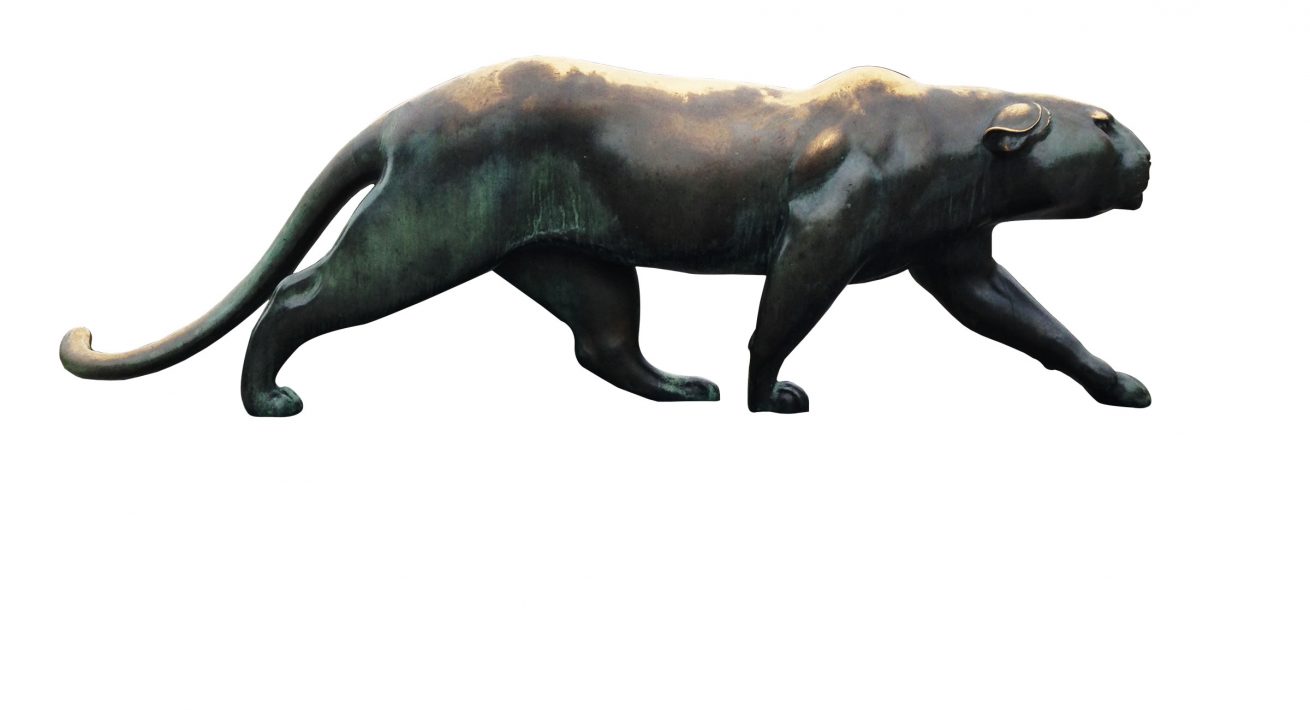
What will happen to the Panther in the Inselbad? The occasion is not the upcoming reconstruction of the Inselbad, but a demand that has been calling for historical-critical and cultural accompaniment for the Panther for five years.
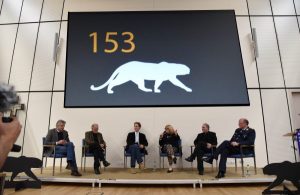
In 2016, Colonel Daniel Draken (Commodore of Air Transport Squadron 61), Norbert Köhler (Board of Directors of Stadtwerke Landsberg am Lech), Manfred Deiler (President of the European Holocaust Memorial Foundation), Dr. Joachim Zeller (historian and author of “Wilde Moderne”), Wolfgang Hauck (artist and project developer), Karla Schönebeck (journalist, moderator), discussed what obligations are associated with the Panther sculpture as a contemporary historical legacy.
Background
The call of the panel discussion in April 2016 was clear:
There is no way we can continue as we are now. What is missing is the proper handling of the artwork and the appropriate and adequate information about the work, artist, and context.
Podiumsdiskussion 2016, Foto Conny Kurz
Wolfgang Hauck’s art project began in 2014 with information and research by the journalist Karla Schönebeck about the panther sculpture in the municipal Inselbad in Landsberg am Lech. In 2016, a socio-cultural art project was realized as a prelude, the first of its kind in cooperation with an air squadron and the Bundeswehr.
In the meantime, another five years have passed without any reaction. The city and the public utility company have failed to take care of the Panther and to take up the offer as requested.
In the years 2021-2023, the rehabilitation and reconstruction of the island band is due. Nevertheless, there was no plan for dealing with the panther until April 2021.
Now, on 23 April 2021, Wolfgang Hauck presented a concept to the board of directors of the municipal utility, Christof Lange, to enable the Landsberg association dieKunstBauStelle to realize appropriate care and public discussion.
This brought the movement to the issue and it was passed on to the city how to deal with this heritage. Thus, the proposal moved from the desk of the board of directors of the municipal utility to the board of directors and is now to be dealt with by the city council.
Hauck’s proposal is about contextualization, the question of location, and the framework of meaning. The former locations of the Panther should also be included in this, in addition to the Inselbad in Landsberger, also the former locations at the Mutterturm and the Fliegerhorst Penzing.
The association dieKunstBauStelle offers to realize a socio-cultural process for this, which is to be carried out from the midst of the Landsberger population and with experts.
There are also ideas for financing the restoration, conservation, and contextualization with publication, web, and multimedia offers with costs of around 45,000 €.
With its expertise and the historians involved, theKunstBauStelle is in a position to realize this project responsibly and professionally. However, this requires cooperation with the municipal utilities as owners.
With the failures of the past and the lack of expertise, neither the board of directors of the Stadtwerke nor the city council has earned any laurels. One could see this initiative and offer it as a special chance to make amends.
However the further handling of the Panther will be envisaged, everyone’s participation, co-creation, and co-determination are needed in this matter.
No more and no less, that is what the Panther deserves, what our Landsberg Panther deserves!
Municipality of Schondorf supports LandsbergHistoryApp
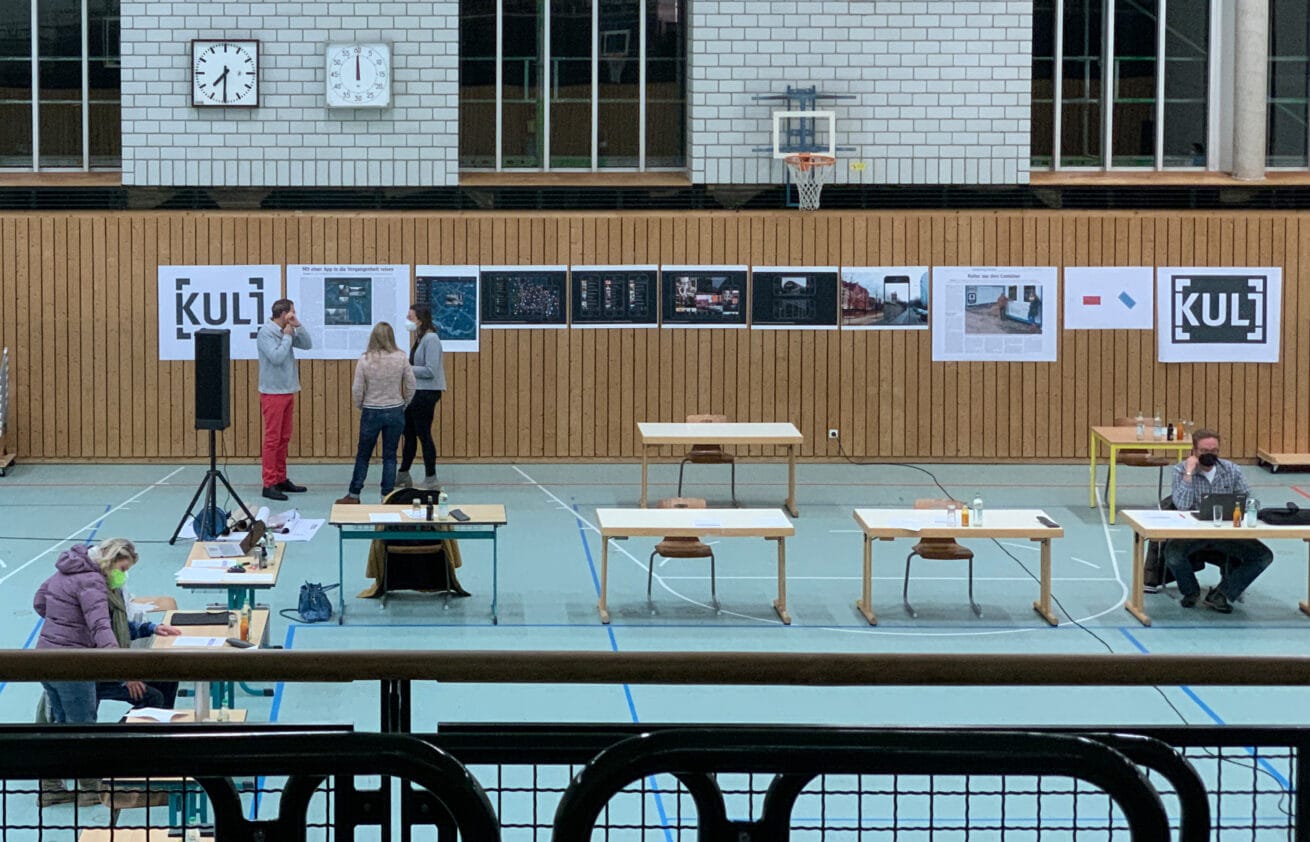
On the long agenda of the municipal council meeting of 24 March 2021 was the presentation of the LandsbergHistoryApp and Kultainer projects.
The presentation of the project by Wolfgang Hauck, dieKunstBauStelle, Dr. Silvia Dobler, Cultural Officer, and Anke Neudel, Events Officer of the municipality, was received and welcomed with great approval.
Silvia Dobler already presented the first topics that could be produced with the app and in the Kultainer. The skater scene in Schondorf also plays a role.
Anke Neudel has already suggested a suitable and prominent location: in the lake area.
A location that is central, popular, and easily accessible for all people of Schondorf, after all, all groups of the population should be able to meet there and have the chance to participate.
So it is not surprising that the local council unanimously decided at 21:45 to participate in the projects.
Photo: Wolfgang Hauck, meeting room of Schondorf municipal council with presentation of LandsbergHistoryApp
The equation is quite simple: A container in which culture is produced is a Kultainer. Whether something like this should also stand in Schondorf for a few weeks is something the local council will decide at its next meeting on March 24, 2021. The Kultainers are organized by the very active Landsberg-based association dieKunstBauStelle (https://diekunstbaustelle.de/project/kultainer-mobile-medienstudios-fuer-den-laendlichen-raum/). In its description, the steel workrooms are “mobile media studios for rural areas.”

 English