Author Archives: wolfganghauck

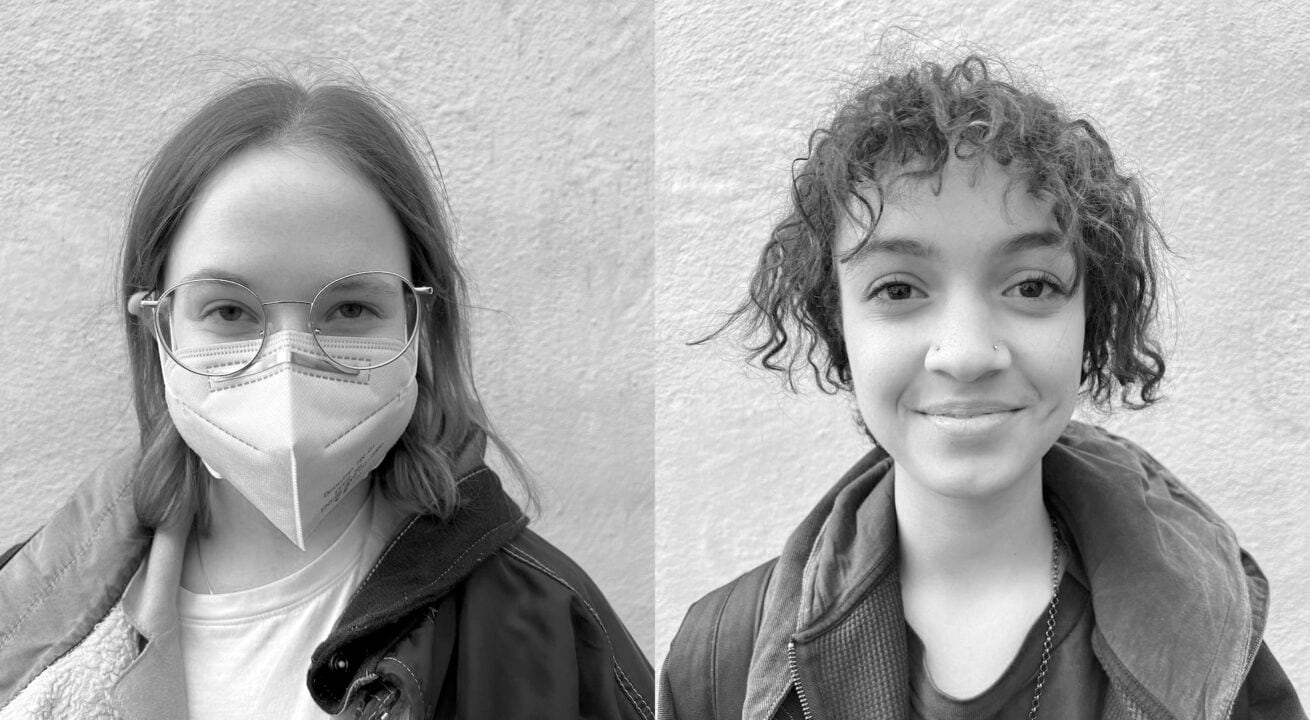
Emily – on internship to Spain

Internship abroad in Granada, Spain at the Fundacion Escuela de Solidaridad

I am Emily and I am in the 11th grade at the FOS Landsberg in the branch design. As you know, the first year at this school is characterized by an alternation of weeks between school and internship. During my search for an internship, I came across Wolfgang Hauck and his association, dieKunstBauStelle, and was impressed by the diversity of the work they do there.

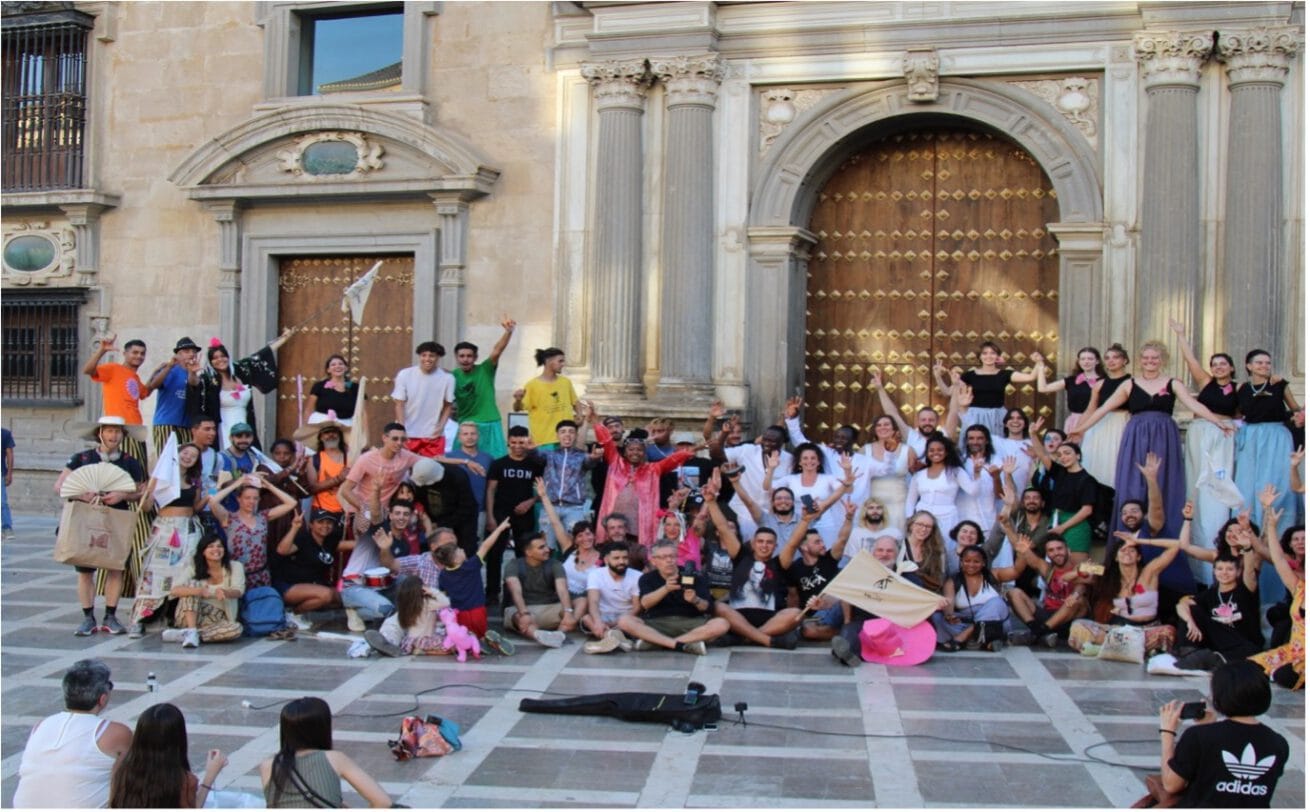
so I introduced myself there and luckily I was able to start an internship there. My work is very diverse, I was very well received and asked to participate in many projects, including the Erasmus project in Granada. So I had the chance to travel to Spain with Wolfgang Hauck and some girls of the Stelzer from Landsberg am Lech and to participate in the project “Festival Krearte”.

We stayed at the Fundacion Escuela de Solidaridad, an organization that takes in children, young people, and families from poor backgrounds and offers them a place to stay, something to eat and much more. The founder of this organization is Ignacio Pereda Perez and he has been running the organization for a long time together with his wife Dora Fanelli.

Respect for everyone you meet is a priority there and it is a safe space for everyone, no matter where you come from or what you look like. We arrived there, were very, very warmly welcomed, quickly made new acquaintances and made new friends. Our plan was to create “something out of nothing” with the people there and above all to work together as a team. The goal of the festival is to bring together different people and different cultures.

At the end of this week, so on Sunday 29.05.2022, the festival started and we moved with a colorful procession through Granada. But now back to the beginning. We flew on Monday the 23.05.2022 from the airport in Memmingen and went to Spain to work on some things and to provide as much support as possible. Also from Thursday to Saturday there were several workshops to prepare some things and also the people for the parade on Sunday.

I prepared with Laura, a Dutch artist who also came with us to Spain, the workshop “Making costumes out of paper”. This was from Thursday to Saturday a good three hours each at what felt like 38″ in the shade.

As it says from the name of this course, we made the costumes out of paper.  We made skirts out of old newspapers or turned wallpaper into hats.

Our motto was “Making something out of nothing”. In the workshop, we shared our methods and experiences of artistic work with refugees and migrant women with the Fundacion Escuela de Solidaridad.

They took place on the premises of the FES and a school near Granada. Here, too, we attached great importance to a practical and action-oriented approach with enough space for reflection and exchange. We had the support of volunteers from all over the world which helped us a lot to finish all pending tasks in time.

The focus of my work was mainly on gender-sensitive intercultural work. This means that during this week we intensively dealt with how we can specifically work with women with a migration background. Here, our stay in the community gave us the opportunity to enter into a direct exchange with the target group and to get to know the perspective of the migrant women living there.

We focused a lot on the basics of gender-sensitive work, creating easier access to projects and programs for migrant women, and empowering of migrant women through artistic inventions. Through solid cooperation with a wide variety of people, we were able to solve all tasks almost without any problems and were able to put together a beautiful procession.

All participants enjoyed the project very much and everyone was very happy, new friendships were made and we got to know each other better day by day.

All in all, I am very, very grateful that I was able to have this experience and would do it again at any time.

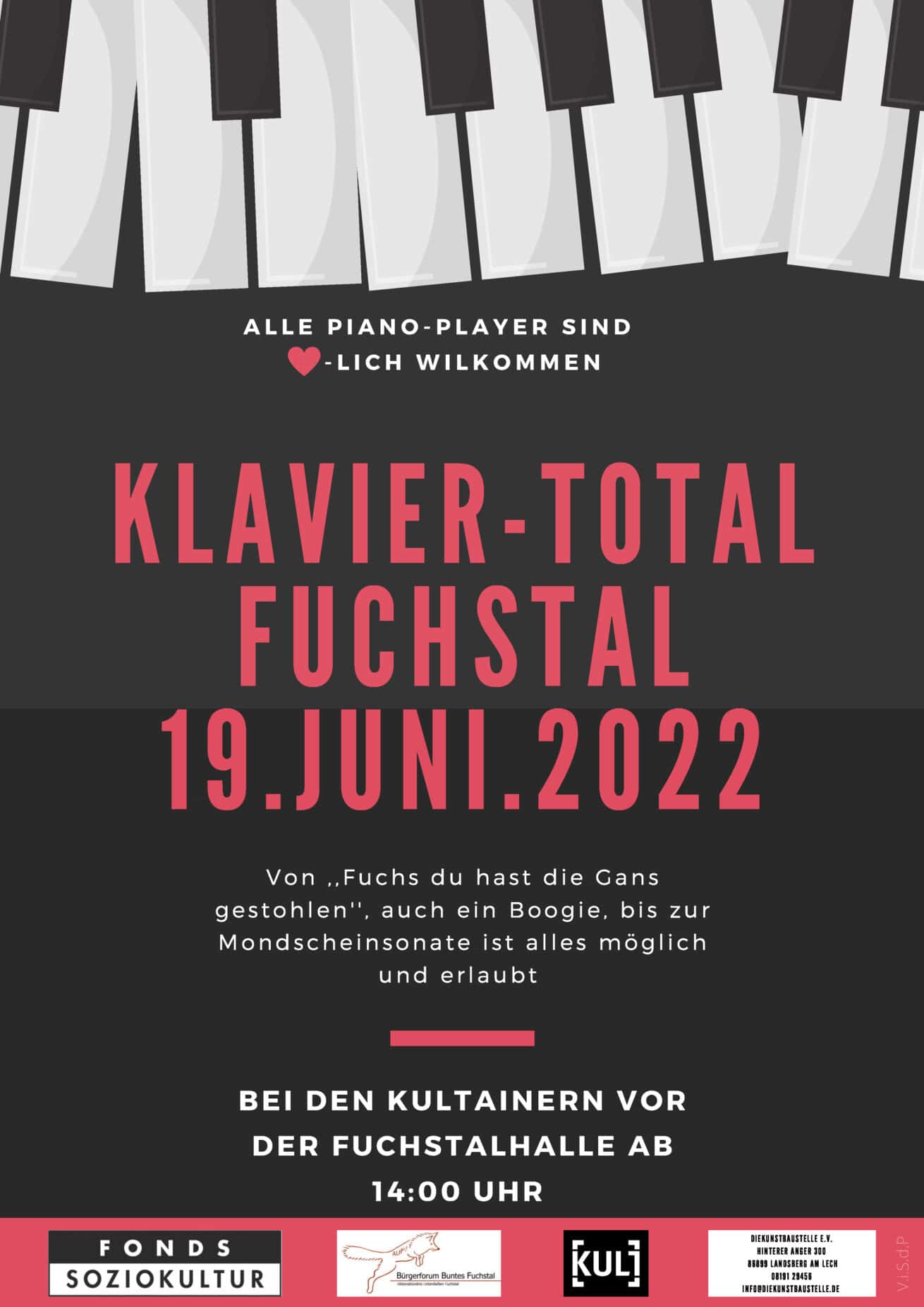
Klavier Total in Fuchstal

Klavier Total in Fuchstal und Lesung Richard Rost

Sonntag, 19. Juni 2022 ab 14:00 bis 18:00 Uhr

Location: Kultainer Fuchstalhalle, Freybergstraße 34, Fuchstal

On Sunday, 14 June at 14:00 the stage is set for pianists, followed at 19:00 by a reading by Richard Rost.

Sunday starts with music. The project “Play Me, I’m Yours” by the British artist Play Me, I’m Yours Luke Jerram is the model for the event “Klavier total”! The Bürgerforum Buntes Fuchstal and the association dieKunstBauStelle transform the Kultainer site into a music stage. To do this, they will simply place a piano in front of the Fuchstal. This is an invitation to all pianists to take up the keys and play.

From “Fuchs du hast die Gans gestohlen”, boogie-woogie to the Moonlight Sonata, everything is possible. The fun of music is in the foreground and this should be transferred to everyone. If everyone brings a drink and a snack, everything is together to make this Sunday an unforgettable experience.

READING RICHARD ROST

At 19:00 there will be a reading by Richard Rost from his book “Das Ketzerdorf – In Ketten”. He is coming back from Italy especially to his birthplace Leeder and will talk about the book, the history and his research. Then it’s back to the year 1577. In case of bad weather, the reading will take place in the youth meeting room.

Sponsored by the Fonds Soziokultur.

Admission is free.

RECONCILIATION OF THE GENERATIONS

RECONCILIATION OF THE GENERATIONS

Reading: The Forgotten Generation

READING

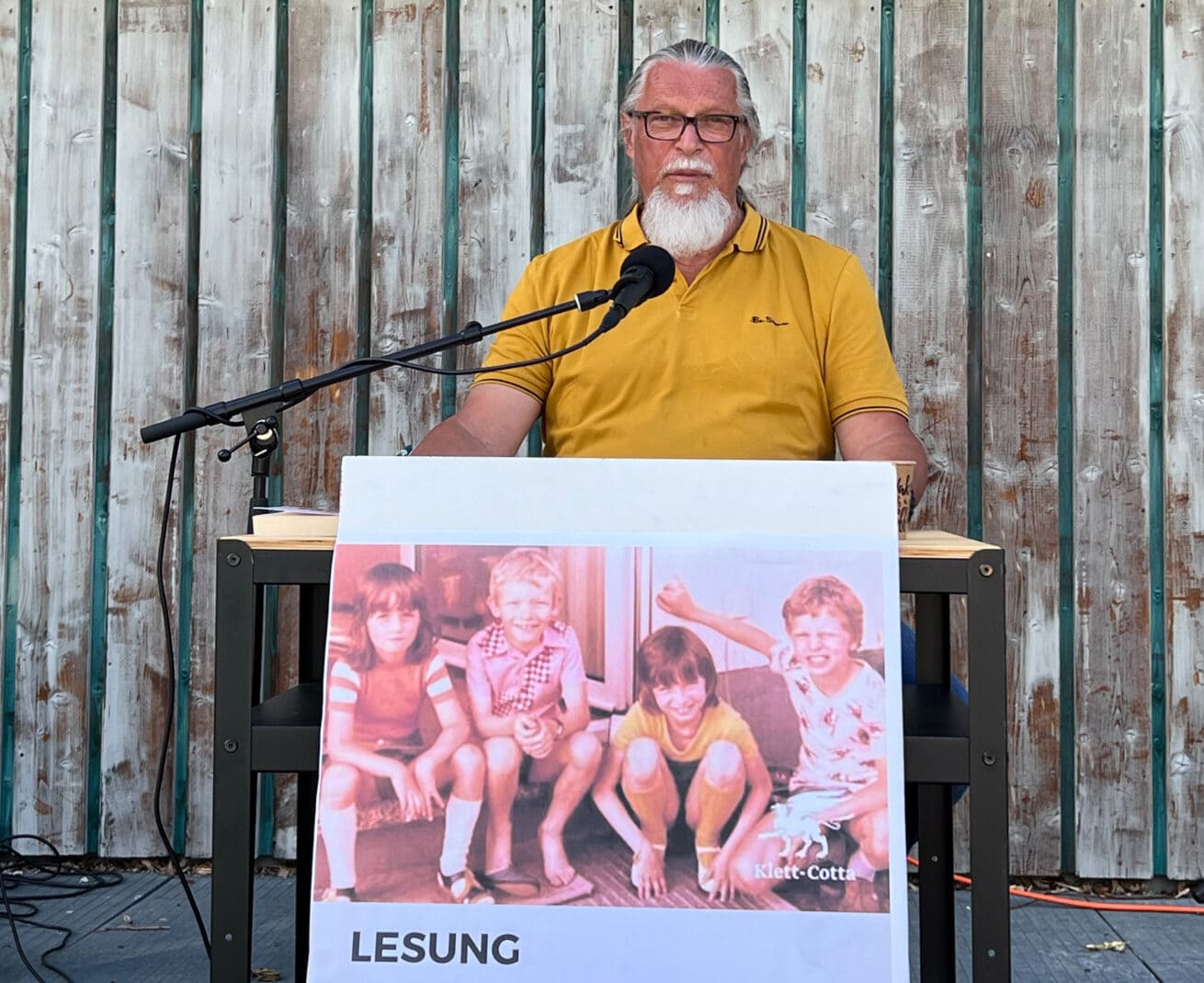
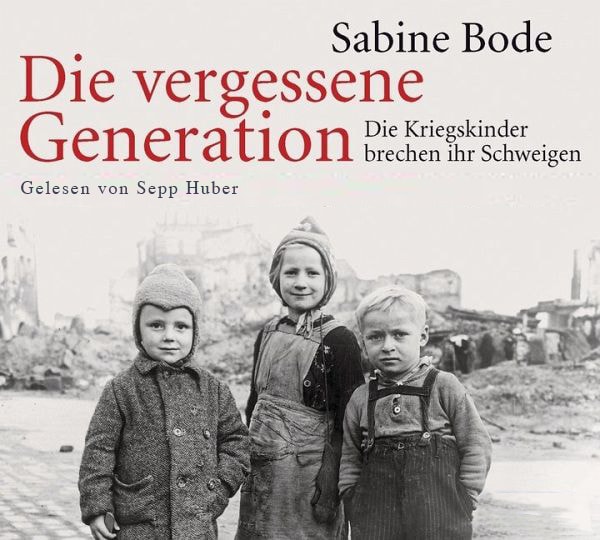
Sepp Huber reads from “The Forgotten Generation” and “The Grandchildren of War” by Sabine Bode

Sunday, 12 June 2022 at 17:30

Kultainer in front of the Fuchstalhalle, Freybergstraße 34, Fuchstal

Free admission

On Sunday, 12 June at 17:30, Sepp Huber will transform the “Kultainer” into a literary stage. He will read from the books of the journalist Sabine Bode. In her texts, she describes the impact and aftermath of the two world wars on the generations of adolescents, based on interviews with contemporary witnesses.

The titles “Die vergessene Generation” (The Forgotten Generation) and “Kriegsenkel” (The Grandchildren of War) tell impressive and moving stories of how war and violence continue to have an effect on the generations of war children and grandchildren.

An event by dieKunstBauStelle and Bürgerforum Buntes Fuchstal.

Admission is free.

#dieKunstBauStelle #intekrator #sbainebode #memory culture #fuchstal #cultainer

The HistoryApp – now also in Istanbul

The HistoryApp – now also in Istanbul

Innovative, integrative, and interactive: The cultural association “dieKunstBauStelle” has been realizing an interdisciplinary media and history project since 2021. A digital and location-based HistoryApp for multimedia access to history. Regional work on the platform began with eight municipalities in the Landsberg district in 2021. International cooperation with universities will now follow. In first place is Turkey’s oldest and largest university, Istanbul University with 60,000 students, founded in 1453. Now a delegation came to Landsberg for advanced training.

The cooperation agreement with Istanbul University and the dieKunstBauStelle association was signed in 2021. “It means a special recognition and requires a great deal of trust to be able to cooperate with a leading institution in the field of education in Turkey,” explains Ensa Filazi, from the university’s Faculty of Literature. First and foremost is the cooperation with the Department of Translation Studies. There, students deal with the transmission between German and Turkish culture, which means much more than just “translating”.

“We have been working with digital conferences since 2021, where topics and methods were taught,” says Wolfgang Hauck, the project leader. Together with Dr. Ensa Filazi and Dr. Neslihan Demez, they have developed a comprehensive study program. Scientific work and the method of the biographical approach were put into practice. This resulted in the “IstanbulHistoryApp” project. With the support of the German-Turkish Youth Bridge, it was now possible to finance the exchange of young people and experts.

The first reception took place in Dießen am Ammersee. There, Mayor Sandra Perzul welcomed the delegation and explained the importance for the target groups of the “DiessenHistoryApp”. Dießen is a pioneer with the HistoryApp and the first contributions are available as Turkish translations. Michael Lutzeier, a cultural officer, who is in charge of the conception and editing in Diessen, did not miss the opportunity to present the contributions to the “Unterbräu” inn and the sculpture of the “Dietz” with personal comments on site.
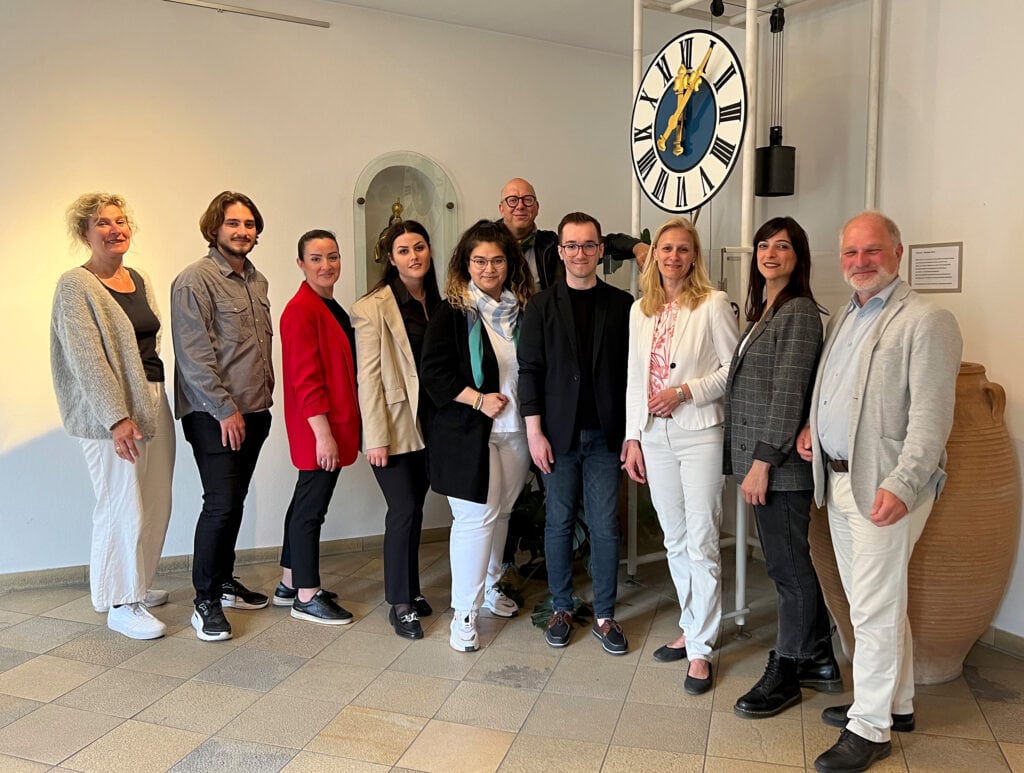
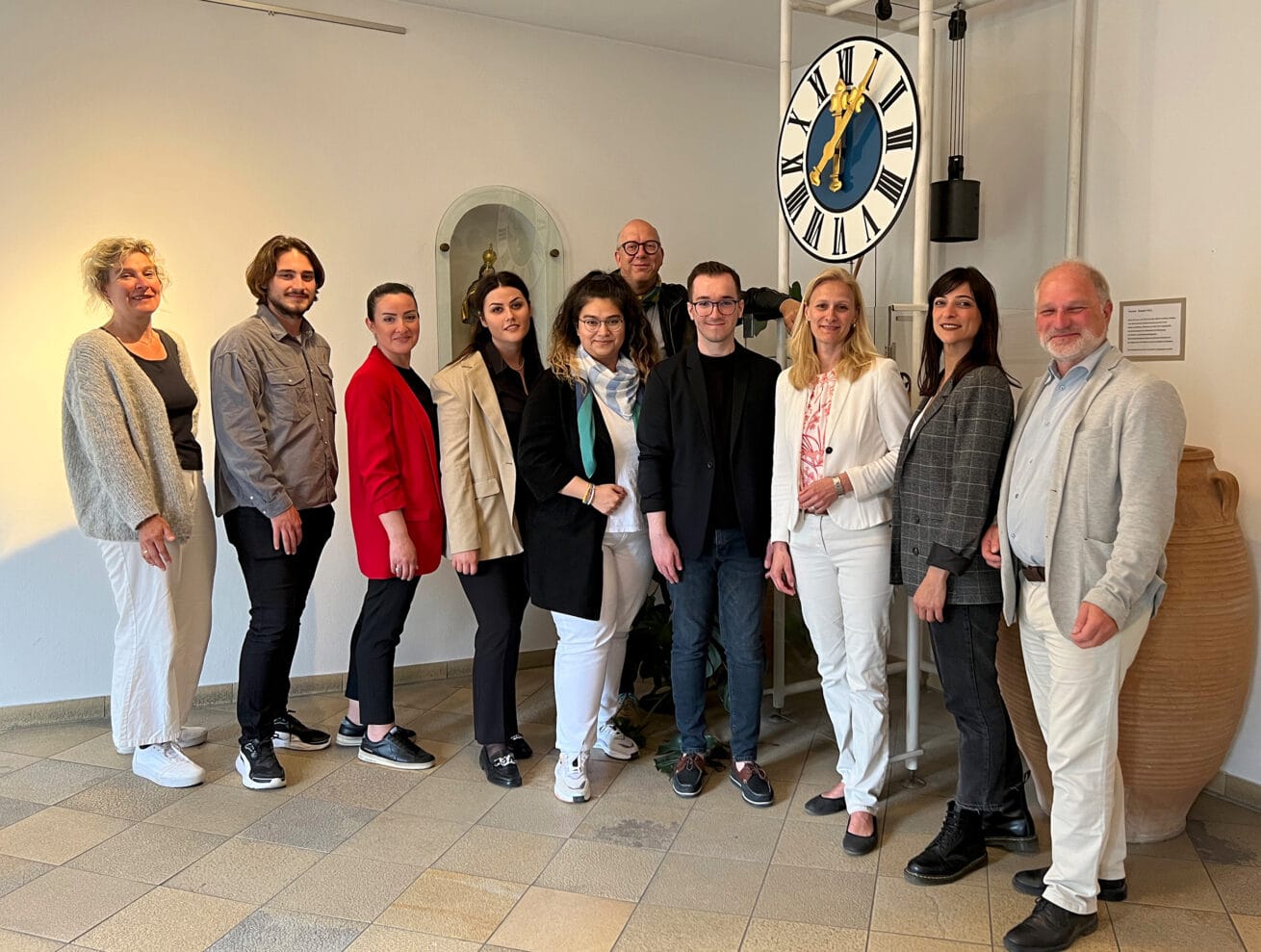
Photo 1: Petra Freund, Dießen:
f.l.t.r.: Dießen am Ammersee: Anke Neudel, Adil Mert Zümrüt, Dr. Neslihan Demez, Sirin Yavuzyigit, Ceren Özge Tastan, Michael Lutzeier, Alper Akbay, Sandra Perzul, Dr. Ensa Filazi, Wolfgang Hauck

University of Augsburg

The second visit was to the university in Augsburg. Dr. Ergün Özsoy, historian and lecturer in Turkish, explained the local history and how the first tulip in Augsburg is connected to the Ottoman Empire. A tulip bulb came to Augsburg as a gift from a Flemish ambassador, marking the beginning of a long history. One example of many of the common past. Now opportunities for German-Turkish exchange are to be established.
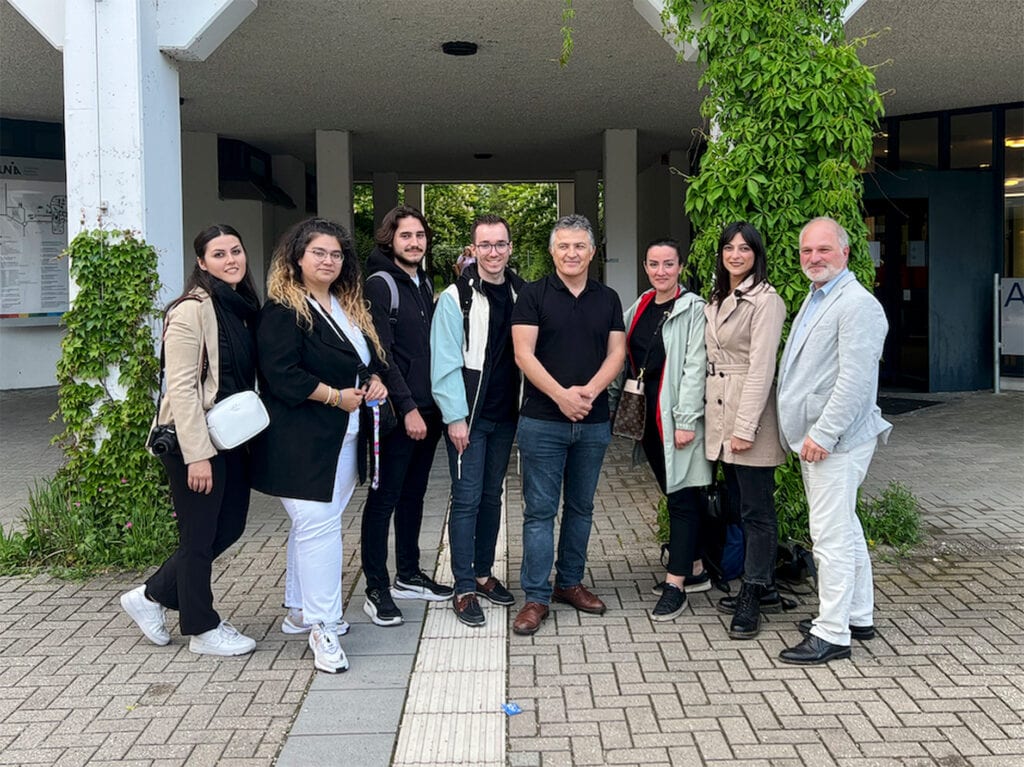
Photo 2: dieKunstBauStelle, University Augsburg:
f.l.t.r.: Sirin Yavuzyigit, Ceren Özge Tastan, Adil Mert Zümrüt, Alper Akbay, Dr. Ergün Özsoy, Dr. Neslihan Demez, Dr. Ensa Filazi, Wolfgang Hauck

“In the background of the project, other academic collaborations are also emerging,” says Hauck, chairman of the Landsberg association dieKunstBauStelle. Jonas Echterbruch from Landsberg is currently working on an audio walk in Landsberg on recent contemporary history, which he will submit as an admission thesis and publish in the LandsbergHistoryApp. The elite Eastern European Studies program at the LMU is developing an audio walk on a post-war topic in Munich.

The interdisciplinary meeting in Landsberg was not only about topics. The participants discussed the scientific methodology and the theory of didactic knowledge transfer. Historian Dr. Edith Raim reported on the current state of theory and envisages further cooperation projects on HistoryApp. Manfred Deiler, President of the European Holocaust Memorial Foundation, was able to report to the students on the work at a memorial site with the practice of research and archive work and guided the delegation through the former concentration camp IIV. Helga Deiler presented a surprise. During the research, she found data on five Jewish prisoners of Turkish origin in the transport lists.
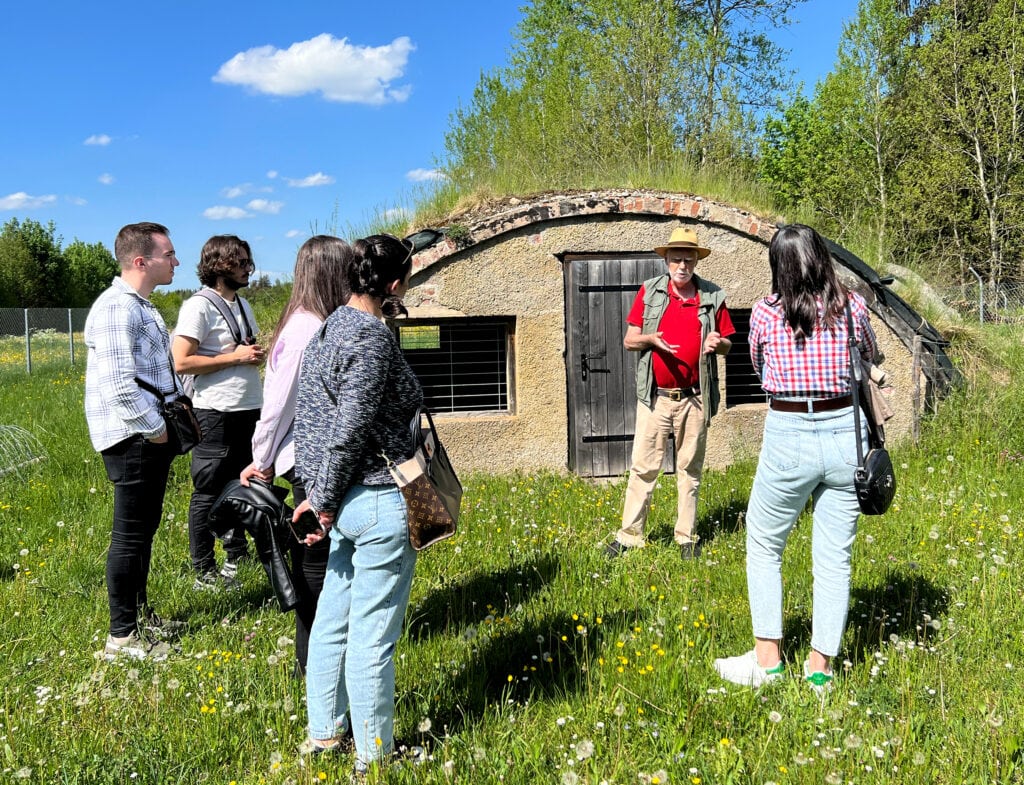
Photo 3: Wolfgang Hauck – Landsberg/ Erpfting
f.l.t.r.: Guided tour of the former Concentration Camp IIV with Manfred Deiler

Alper Akbay, a graduate of the programme, has been involved in the workshop in Turkey from the beginning. He would like to continue working on the HistoryApp. Like many others on the course, he was born in Germany and grew up bilingual. The best prerequisite for this study. “For me, this format of the HistoryApp is a door opener for “Public History”. It makes cultural perspectives as well as historical perspectives accessible in a low-threshold way.”

“The app thus becomes an exploration and navigation tool on a source-based foundation, which opens up many didactic possibilities for us in the subjects of study,” adds Ensa Filazi, academic director of the department. This makes it possible to experience history in places directly on site.

“We have now experienced in Germany how remembrance work at memorial sites as authentic places is changing. The new media combine participatory mediation formats and professional skills,” says Neslihan Demez, also in the academic management of the department.
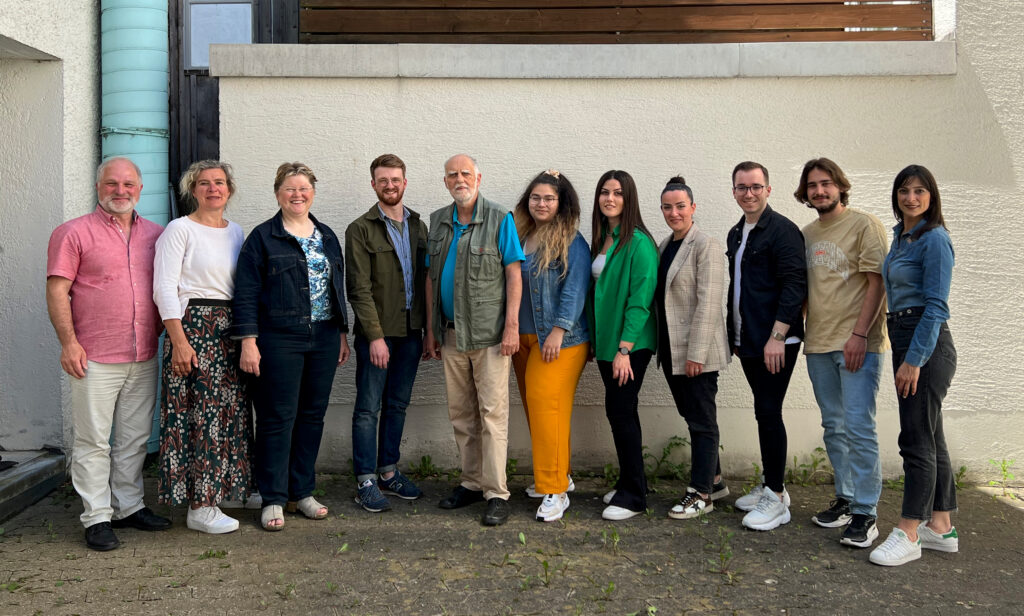
Photo 4: Barbara Helleis – Landsberg
f.l.t.r.:  Landsberg: Wolfgang Hauck, Anke Neudel, Dr. Edith Raim, Jonas Echterbruch, Manfred Deiler, Ceren Özge Tastan, Sirin Yavuzyigit, Dr. Neslihan Demez, Alper Akbay, Adil Mert Zümrüt, Dr. Ensa Filazi,
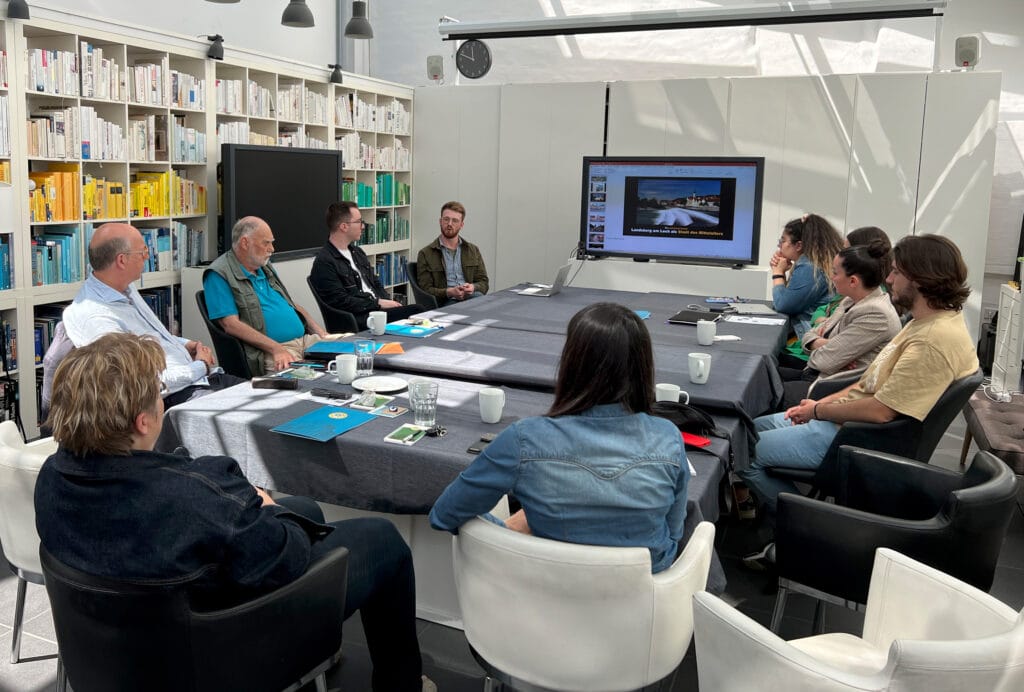
Photo 5: Photo Wolfgang Hauck – Landsberg
Working session on the “PeraHistoryApp” and “LandsbergHistoryApp” in Wolfgang Hauck’s media workshop

Now other faculties, such as the humanities and departments of English, French, Persian, and Arabic at the university are being integrated. Therefore, Persian and Arabic sources can now be made accessible. This interdisciplinary kick-off is another building block for the HistoryApp project and is intended to qualify and expand the multilingual version.

Quotes from the participants

“Learning about the complex history of Landsberg and the opening of the Kreiskulturtage was an unforgettable experience. I consider myself very lucky to have participated in a workshop with this wonderful team in a place like Landsberg.”

Adil Mert, Student

“It was my first visit to Germany. Since my childhood, I have only had one image of Germany before my eyes. Landsberg matched this beautiful and great image of Germany. It was like a walk through a fairy tale for me. The training was so efficient and educational. As researchers, we had the opportunity to discuss together how we can integrate our work and research even more intensively into HistoryApp. For me, an important aspect was how we can optimize our research to be able to communicate our work results in a user-friendly and source-based way.”

Ceren Özge Tastan, student and research assistant
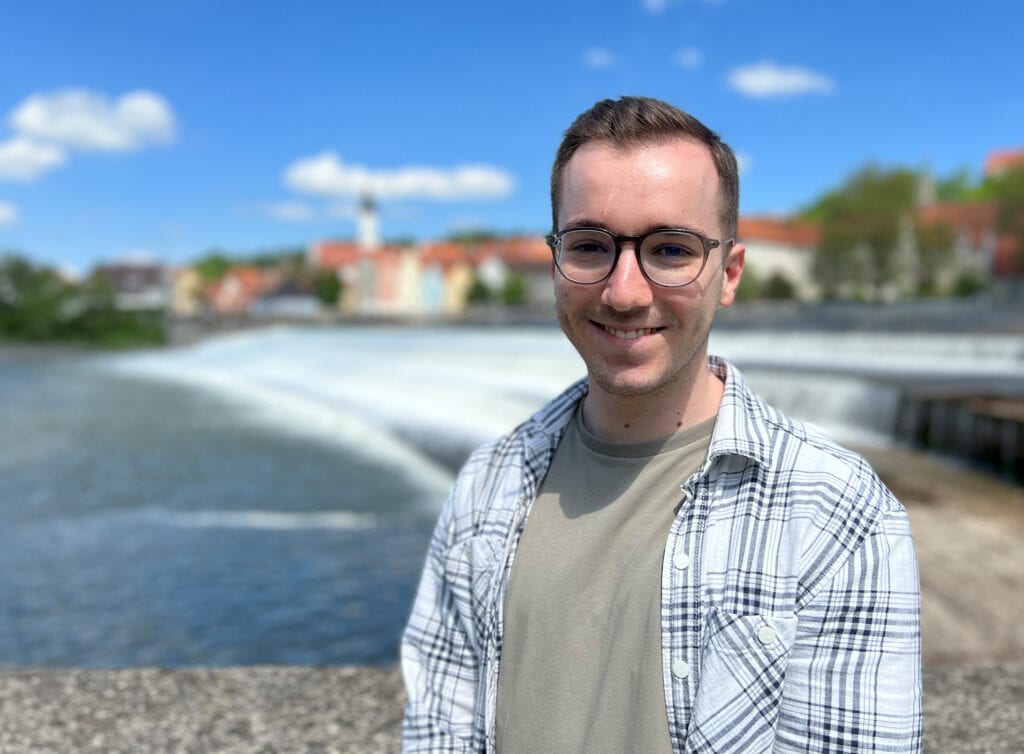
“Landsberg am Lech really excited me from both a cultural and historical perspective. I had the opportunity to meet great people and exchange ideas with them. I took away not only interesting but unexpected information from the workshop and the different excursions. This inspires and motivates me for my further work on and with the HistoryApp.”

Alper Akbay, a graduate of the 2021 degree program

University Istanbul

With over 60,000 students, T.C. Istanbul University is one of the leading universities in Turkey. The Faculty of Literature has been training students for the interpreting and translation profession for around 25 years. The department “Interpreting and Translating German” undertakes many projects to familiarise students with partners for the demands of practice. With the translation club “İSÇEV”, the connection to the translator market in Turkey is made. This gives students an insight into the professional life of interpreters.
Book presentation with a reading

Book presentation with a reading

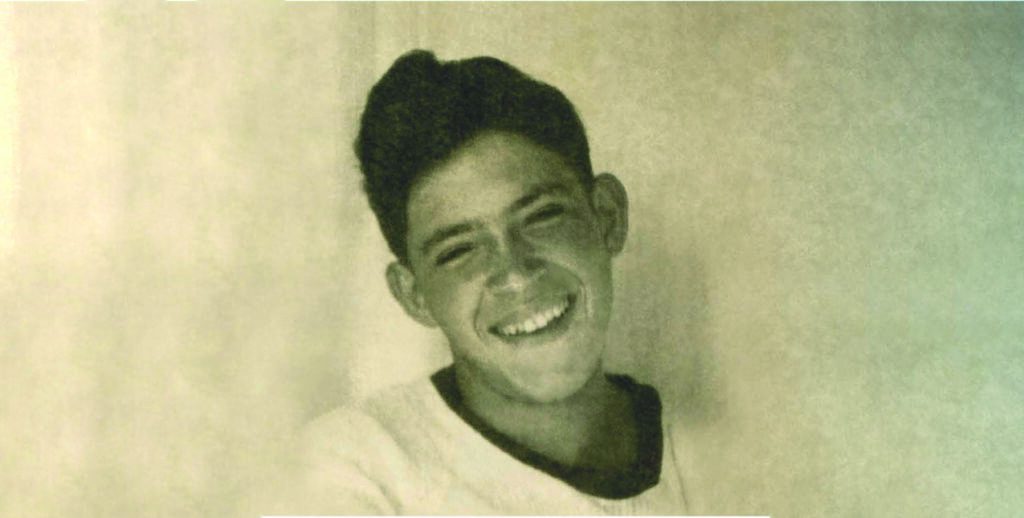
Book launch of Uri Chanoch’s book “From Kaunas via Dachau to a new life” on Saturday, 7.5.2022 at 3 p.m. in the Kultainers in front of the Fuchstalhalle, Leeder

Many people in our region have come to know the survivor Uri Chanoch (1928-2015): he has often spoken of his memories of the Holocaust in many schools, given speeches at memorial events, and, since 1995, has repeatedly ensured through his presence that the genocide is not forgotten locally

Less well known is his commitment to the compensation of labour in the National Socialist ghettos, which also took him to Berlin many times. His many and varied activities up to a ripe old age ensured that he did not find the time to write down his life story.

Only after his death was it possible to publish his book at the beginning of this year, which was published by Allitera Verlag in Munich and written by his widow Judith on the basis of his stories and notes.

The book, which has already been published in Hebrew and English, is now also available in German. Numerous photographs illustrate an extraordinary life. The work takes the reader from Uri Chanoch’s carefree childhood in Lithuania to the Kaunas ghetto and the Dachau subcamp complex of Kaufering. After four years of ghetto and concentration camp imprisonment, he escaped from the train near Schwabhausen shortly before the end of the war, where he experienced liberation by the Americans.

After a short stay in Landsberg in the early summer of 1945, he travelled to Italy to find the only other survivor of his family, his brother Daniel. His parents and sister had been murdered.

The brothers emigrated illegally to Palestine, moving to a kibbutz until Uri Chanoch joined the paramilitary Palmach to fight for the establishment of the State of Israel. In addition to the autobiographical information, the book also reports on how the Nazi past was dealt with in Germany and Israel and represents an important contribution to the culture of remembrance.

It makes clear that even after the death of the survivors, their story will not be forgotten and their message of understanding and peace will be carried forward. In addition to a short presentation of the book, passages from the book will be read.

Book presentation with a reading

Uri und Judith Chanoch:

Von Kaunas über Dachau in ein neues Leben. Erinnerungen eines Holocaust-Überlebenden,

Erschienen im München: Allitera Verlag 2022, 255 Seiten, 24 Euro

Location:          Kultainer vor der Fuchstalhalle, Freybergstraße 34, 86925 Fuchstal

Date:                 Samstag, 7.5.2022, 15 Uhr

EU delegation visits cultural project in Fuchstal

EU delegation visits cultural project in Fuchstal

Digital backpacking – 15 languages, one goal

Fuchstal welcomes participants in the international EU project “Digital Backpacking”. What connects the Kultainer with the EU project and why an anklet from the Turkish War can be an example of storytelling in times of digital travel.

Fuchstal/Landsberg: They live in Denmark, Amsterdam, and Germany, but half of the participants were born in Syria, Afghanistan, Ethiopia, Burundi, and Yemen. Nine moderators and reporters aged between 22 and 36 and five leaders of organizations are part of a project that aims to build contacts in crisis regions and facilitate a digital cultural exchange “as a digital backpacking trip”.

“The regions of Yemen, Afghanistan, Ethiopia and Syria suffer not only from perennial conflicts and wars, suffer not only from a lack of food but above all from the need to be forgotten,” says Berit Muhlhausen, who, together with David Mason, built a mobile, small children’s circus for thousands of children in Afghanistan for over 18 years, which is still active in all regions today.

An important utensil of the “digital backpack trips” of this Erasmus project of the EU, through which the travel obstacles of the last two “Corona years” are to be digitally overcome, are mementos of stays abroad. Fuchstal has a very special “souvenir” to offer: A wrought-iron anklet in the village church. This tells the story of a prisoner of the Turkish Wars and his return home.

In autumn, more than 45 contributors to the project will meet in Berlin to bring the results together in different formats. The EU is particularly enthusiastic about the idea of a digital exhibition and is funding the project with €113,000.

Before visiting the church in Leeder, the international group of experts was welcomed by Fuchstal’s mayor Erwin Karg in front of the containers, who advised in view of the beautiful weather: “Be happy!” In his speech, Karg expressed special thanks for the participation of Gabriele Triebel, a member of the state parliament, and Margit Horner-Spindler, deputy district administrator.

Triebel emphasized the relevance of a travel project for young people: “Young people have not had the experience through the pandemic, which is deeply human with all of us. They have to learn it first.” Margit Horner-Spindler emphasized how important interpersonal exchange is in her opinion: “You get a different view of culture, politics, and religion. Only through exchange and remaining in dialogue do you ultimately achieve peace.”

Wolfgang Hauck, the partner in the international EU project, explained the connection between the Kultainers circulating in the Landsberg district and their predecessors, the very colorful Afghan “Funtainers” (fun, fun, and containers) and the Turkish flying libraries, the “Edutainers” – education for education. The Kultainers want to use mobile technology to support cultural exchange between people in one place.

One of the supporters and partners is the Hamburg-based Association “Dignity for Children”, which Anna Lena Johansson founded with her husband in 2003. She too knows the situation on the ground in crisis regions.

Wolfgang Hauck, dieKunstBauStelle, now met two Afghan trainers again, whom he trained as stilts trainers in Afghanistan in 2018. “Walking on stilts was, apart from juggling, the only activity that girls and women were also allowed to do. This gave the girls a new attitude towards life and experiences to have a ray of hope with the difficult situation,” says Hauck.

Social Circus” is the term used to describe social work with children and young people in which the techniques of the circus can be used to provide effective trauma education. “A look at the thousands of videos and pictures shows the social and emotional effect these offers have for living together in times of crisis,” says Mie Clemens Schwartz, an anthropologist who got to know the project in Kabul eight years ago.

This diverse composition of the team was at the beginning of the visit to Fuchstal. The welcome was spoken in 15 different languages, not including the Bavarian welcome by Mayor Karg.

Press release 16 April 2022

Katharina and Vivian

Volunteering with the dieKunstBauStelle

We, Katharina and Vivian, both come from the district of Landsberg am Lech. We are 19 years old (2022) and graduated from high school here in the city last year. Since we wanted to do something creative and cultural nearby, we came across the association dieKunstBaustelle.

There Wolfgang Hauck, the director of this organization took us in very warmly for a three-month internship. During this time we helped and worked on various projects.

Layout for Documentary

Some of our tasks were writing or translating texts for the website, and we also helped to prepare workshops. Then we helped with the documentation for the Future Workshop Bahnpark Augsburg. In the process, we wrote texts and learned how to format and edit texts in a professional layout program (InDesign).

Many of the tasks were completely new to us and were a challenge, but it was worth it because we all learned a lot and got to know a variety of topics and aspects of cultural and artistic work.

For example, we learned the basics of working with programs like Audacity, InDesign, and Photoshop. This will definitely be very helpful for us in the future, whether in our studies, job, or for our application documents.

Our thanks go to the team of dieKunstBaustelle and Wolfgang Hauck for the many experiences we were able to gather during the internship!

HANDBUCH DER WILLKOMMENSKULTUR ART NO STOP

A European Erasmus project combines art and social work
Landsberg: The European Union supports a socio-cultural cooperation project in which the association dieKunstBauStelle takes over the realization of the digital design.
The qualification and experience of the partners from international socio-cultural work convinced the EU Commission, which is providing 200,000 euros for this purpose.
For the current working session, eight artists, social workers, and heads of social organizations came to Landsberg for four days in February.
Participants in the international meeting in Landsberg were the heads of a cultural and social center in Brindisi (Italy), an integration center for refugees and cultural center in Granada (Spain), a street art association in Amsterdam (Netherlands), and the socio-cultural association dieKunstBauStelle from Landsberg, which was the host.
The other locations of the funded EU project “Art No Stop” are Spain, Italy, and the Netherlands. Working sessions will be held there to pool the experience of sociocultural projects in a handbook, training courses, and an online platform.
Photo: Conny Kurz
Picture 1: from left to right: Dora Fanelli (SP), Gabrielle Cagnazzo (IT), Ankie Til (NL), Ed Santman (NL), Ayelen Bursztyn (SP), Sylvia Paradiso (IT), Wolfgang Hauck (DE)

INTERNATIONAL EXHIBITION FutureFlashback

On 1 March, the exhibition of the project “FutureFlashback” will be opened at the T. C. Istanbul University by the Dean Prof. Dr. Hayati Develi, Head of Department of the Faculty of Literature Prof. Dr. Necdet Neydim, and the Turkish project leader Dr. Ensa Filazi. The project leader of the IELEV School, Stephan Reischl, who co-developed the concept with Wolfgang Hauck, will also participate.
The project leader and initiator, Wolfgang Hauck, from the association dieKunstBauStelle, will travel to Istanbul with Anke Neudel, the association’s project coordinator for international cooperation.
The project began in 2019 at the secondary school in Landsberg and gradually spread further and further internationally. First came the public school İELEV in Istanbul, then schools in Ukraine, and then Istanbul University with the Faculty of Literature.
In order to make this project multilingual, the Interpreting and Translating (German-Turkish) Department of Istanbul University was involved in this project and contributed to the intercultural cooperation.
A total of 50 audio contributions from the students were divided among the students from different semesters of the department, transcribed, translated into Turkish, and read in again as audio contributions. The division of work between the students was assisted by Alper Akbay, a graduate of the department. Transcriptions, translations as well as audio recordings were completed by Ayşenur Yavuz, Sümeyra Tatlı, Deniz Varol, Yasin Atar, Hatice İnci, Tolga Maden, Sümmeye Saliha Kantar, Sema Durmuşlar, Şimal İda evik and Ersin İşbilir. The official website was translated into Turkish by graduate Suna Yıldırım.
Now, for the first time, all language versions are being shown in Istanbul. It is just too tragic that the exhibition in Ukraine was launched in January 2021 and now the traveling exhibition has to be postponed.
The first part of the exhibition was already on display in Landsberg on the main square. There, one could call up the sound recordings of the young people’s contributions with QR codes. This connected the digital and analog worlds,
The digital exhibition is independent and can be accessed at:
The various international participations were supported by:
Kultur macht stark, Türkische Gemeinde ein Deutschland Mein Land- Zeit für Zukunft, Deutsch-Türkische Jugendbrücke, Foundation Remembrance, Responsibility and Future EVZ, Multicultural Ukraine (MKUA).