
 English

Democracy in the parking lot:
Standstill, arrival or departure
Discussion and guidance
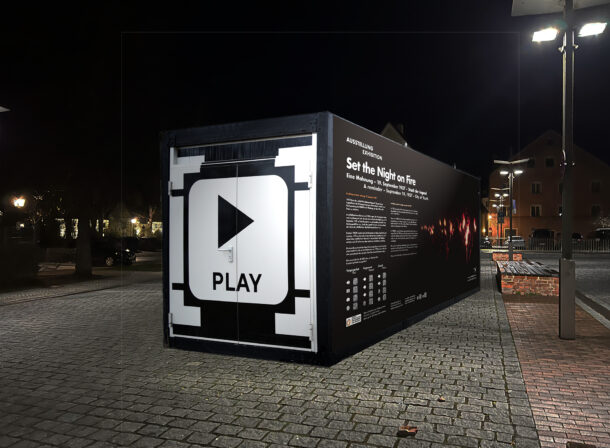
What does an inconspicuous parking lot have to do with democracy? More than you might think. This is precisely where the question of responsibility arises – to act or not to act, then as now.
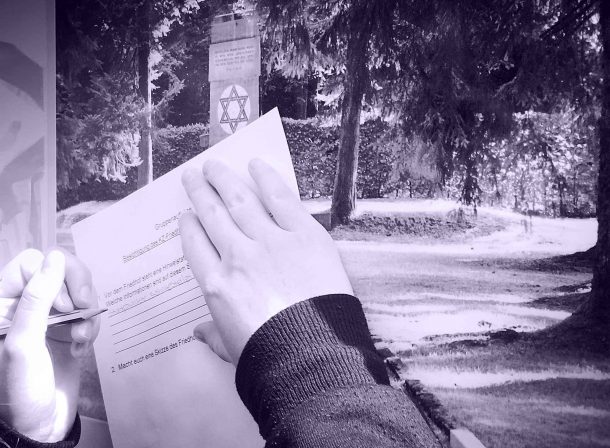
At a meeting in the parking lot, we will look at the history of the former Kaufering VII subcamp after 1945. The historical site provides impetus for a discussion about democracy, its dangers and our responsibility in the present.
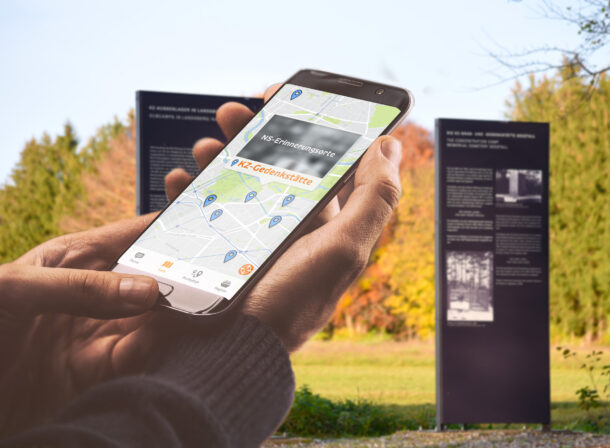
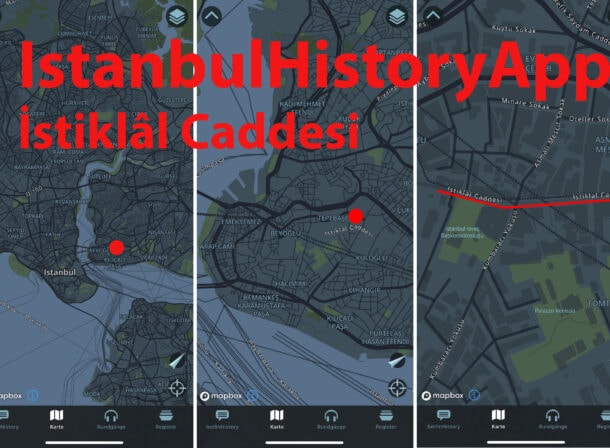
The free NaziCrimesAtlas app accompanies the in-depth historical study.
EVENT:
- Friday, March 20, 2026, 2:00 p.m. to 3:30 p.m.
- The event on March 20 will take place in the open air.
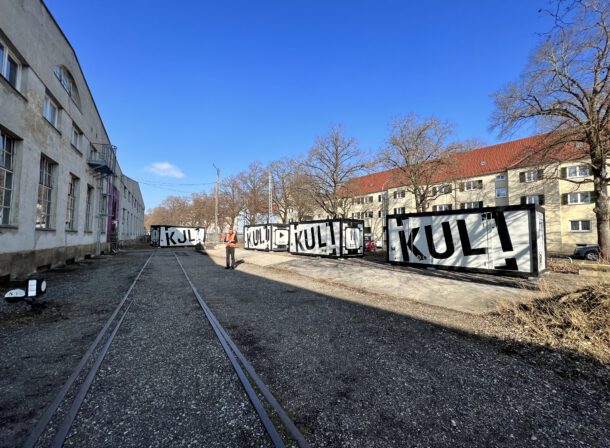
- Location: In the parking lot on Erpftinger Straße between Landsberg am Lech and Erpfting, Kaufering subcamp VII
- Access is only barrier-free to a limited extent.
- Participation free of charge.
- From 14 years
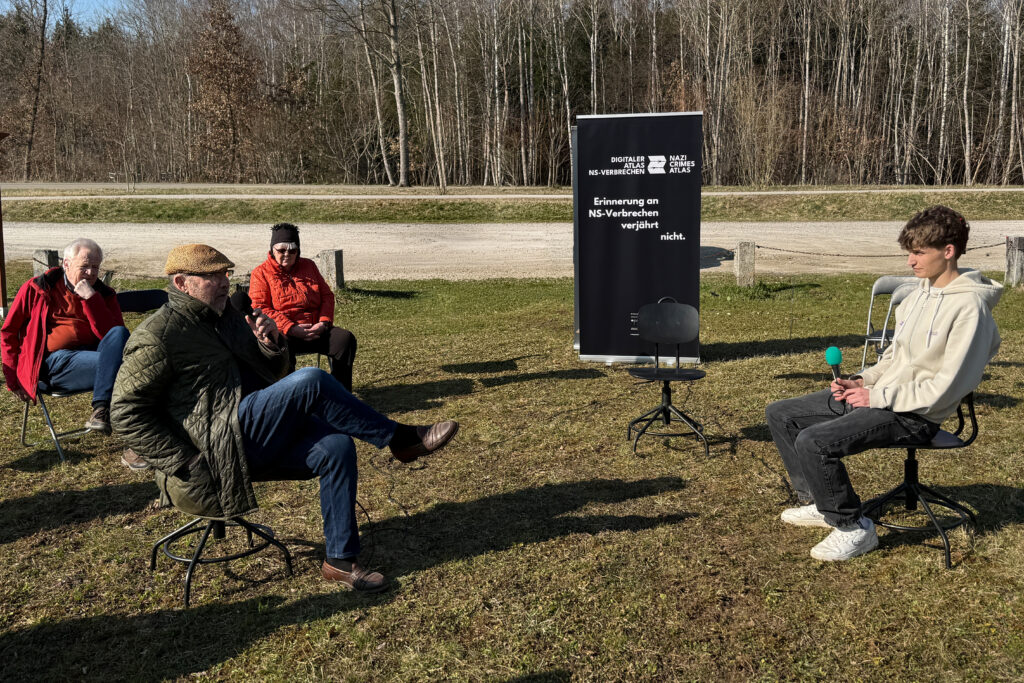
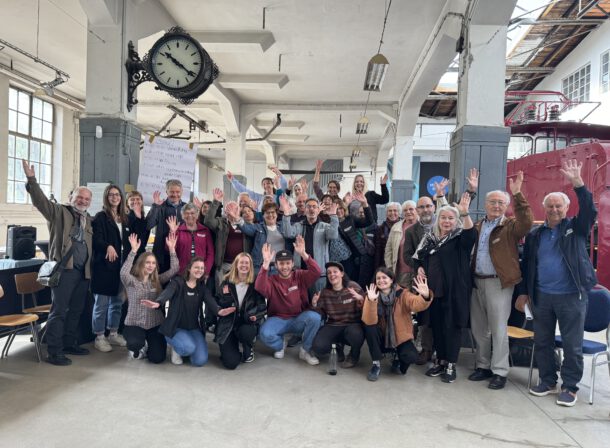
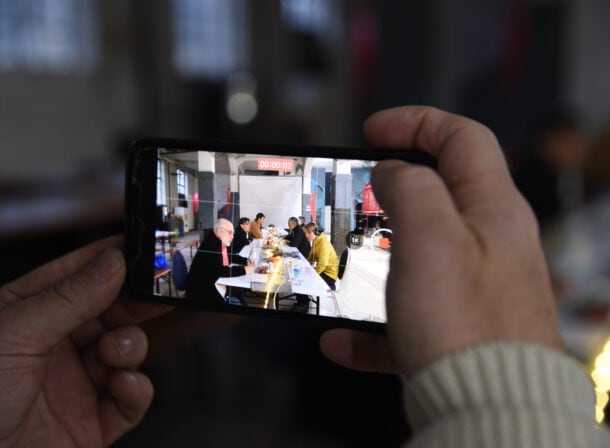
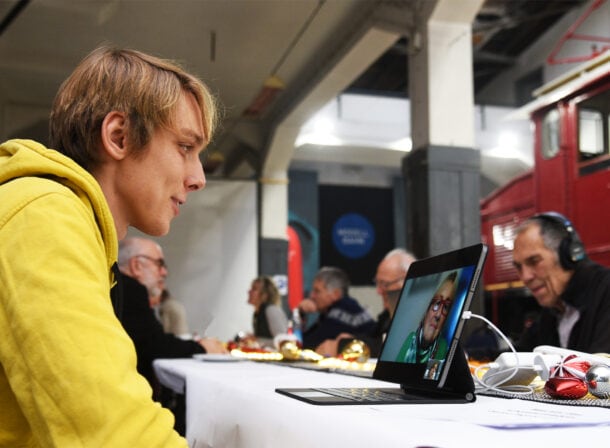
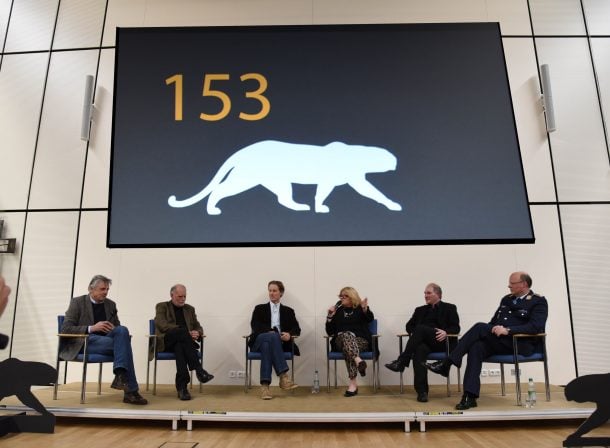
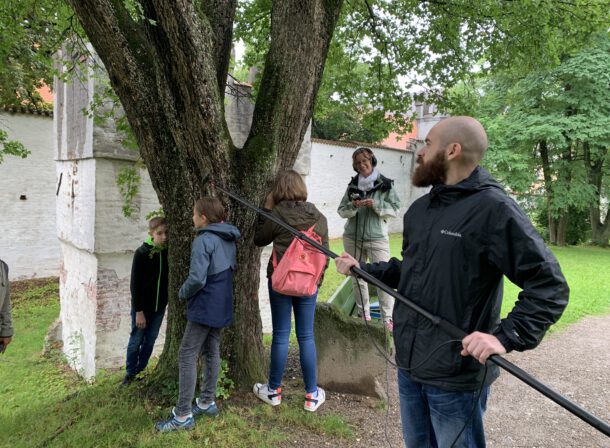
The photo shows Alois Kramer (left) and Marlon Schneiders in conversation in the “Democracy parking lot”. Photo: Wolfgang Hauck
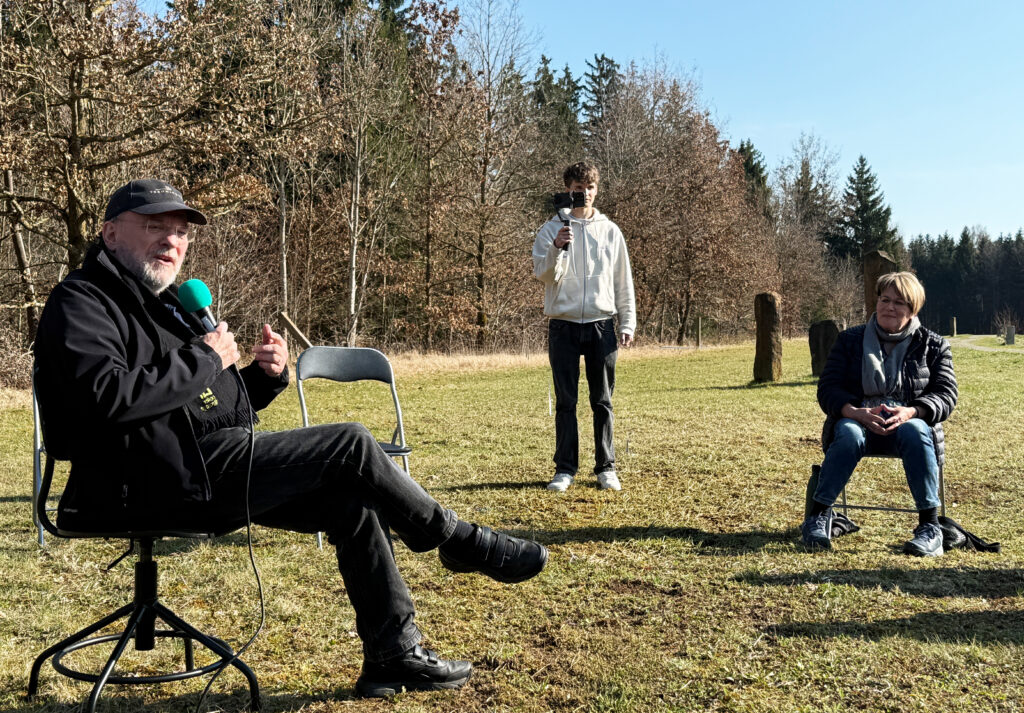
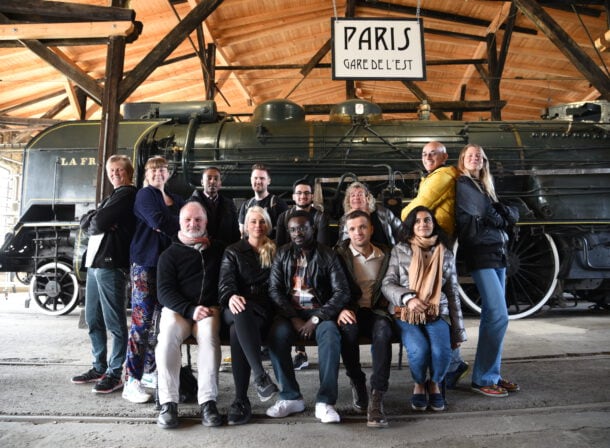
The photo shows Robert Fischer (left) and Marlon Schneiders, and Helga Deiler in conversation in the “Democracy parking lot”. Photo: Wolfgang Hauck
An event as part of the “History of Democracy Day”
From March 18 to 21, 2026, under the patronage of Federal President Frank-Walter Steinmeier, events will be held nationwide for the first time to mark the Day of Democratic History.
March 18 stands for the German struggle for democracy like no other date: from the Mainz Republic in 1793 to the revolution of 1848 to the first free Volkskammer election in the GDR in 1990. In 2026, this day will be celebrated nationwide for the first time as “Democracy History Day” – with over 250 exhibitions, guided tours, discussions and other events.
Be there!
INFORMATION:
www.tag-der-demokratie-geschichte.de/
www.nazicrimesatlas.org
DATE OF IMPLEMENTATION: March 20, 2026
PROJECT PROPERTY: dieKunstBauStelle e. V.
CONCEPT AND IDEA: Wolfgang Hauck
PROMOTION WITHIN THE FRAMEWORK OF THE DAY OF DEMOCRATIC HISTORY:


PRESS ARTICLE
2026 Aloys News: Democracy parking lot: guided tour and discussion at Kaufering VII subcamp
STATUS: The project has been completed.
Press release: March 23, 2026
Democracy parking lot: guided tour and discussion at Kaufering VII subcamp have an impact
Landsberg am Lech: It could have been a nice guided tour. In the parking lot on Erpftinger Straße, between Landsberg and Erpfting, lies the site of the former Kaufering VII subcamp – one of eleven camps of the Kaufering subcamp complex, the largest subcamp complex of Dachau concentration camp. On March 20, 2026, fourteen people paused here. What followed was different than expected.
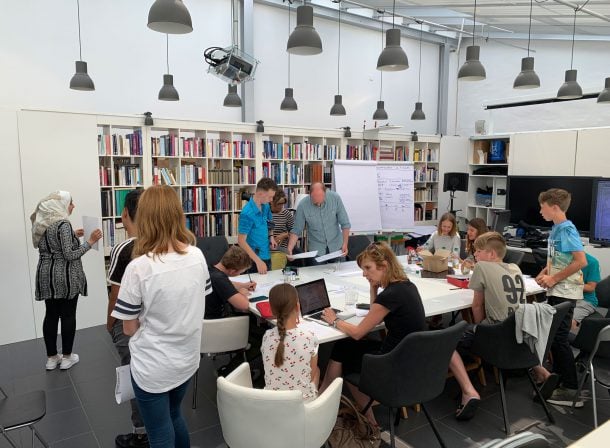
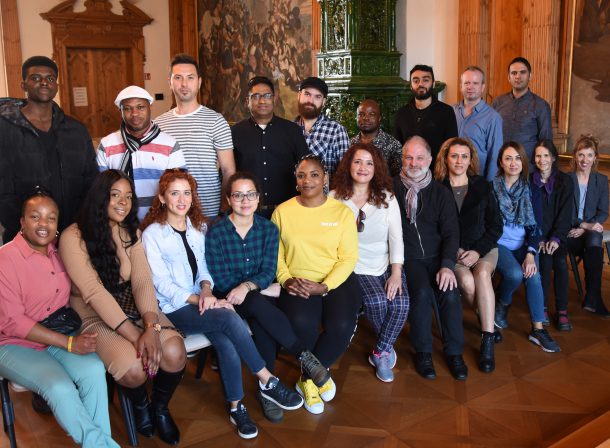
Those who came could hardly have been more different: filmmaker Robert Fischer, journalist and philosopher Alois Kramer, former principal Christian Karlstetter, a pupil from Ignaz-Kögler-Gymnasium, a social work specialist, newcomers from the district – and some who, to be honest, had only expected a walk with App.
Wolfgang Hauck, board member of the association dieKunstBauStelle e.V., had designed the tour with an audio walk in the “BayernHistory” app. The voice of the late Manfred Deiler, former president of the European Holocaust Memorial Foundation, could be heard – recordings that Deiler had made in his last weeks in hospital. The site preserves the ruins of so-called clay pipe barracks as well as the last traces of former concentration camp earth huts, preserved thanks to the decades-long commitment of the Landsberg Citizens’ Association, which was founded in 1983.
What carried the tour were questions that Hauck asked at the site itself: Why is the fence not a fence? What is behind a wooden bench or an information board when you know what preceded its erection? These irritations, expressed directly on site, left no one cold. The hour flew by.
“A culture of remembrance doesn’t always have to start in the past, but can also be based on the present and how it deals with history. This is effective and authentic in the present,” says Wolfgang Hauck.
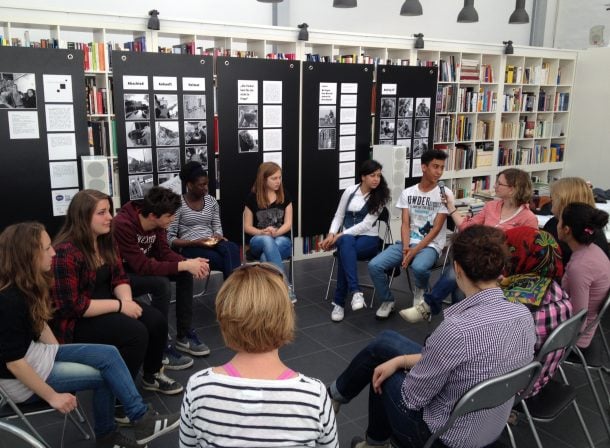
The discussion afterwards moderated itself. In the FishBowl format – two people in the inner circle at a time, changing places as required – the discussion focused on what had accumulated during the tour. Robert Fischer called what committed citizens used to be accused of as “nest soiling” simply “nest cleansing”. Christian Karlstetter warned that teaching history at school should not just be a matter of ticking off curriculum content. And the eleventh-grade grammar school student said what many were thinking: Excursions often seemed like a short visit without really making the suffering of the victims comprehensible.
Alois Kramer spoke about a friend whose parents had survived Auschwitz. He could well understand, said Kramer, that there are Jewish people for whom the soil of Germany is still “contaminated” today.
What emerged in this round: memory work does not function as a compulsory program. It first needs the space in which something can be felt and thought about together – only then does it lead to knowledge and the ability to make judgments.
At the end, a wish was expressed that no one had seen coming at the beginning of the afternoon: The new Landsberg city councillor should take part in the next round. Wolfgang Hauck is also planning documents for schools that will enable teachers and pupils to really prepare – not a compulsory round.
March 20, 2026 was the first day in the history of democracy, celebrated nationwide under the patronage of Federal President Frank-Walter Steinmeier. The fact that it was celebrated in a parking lot in Erpfting was, like so many things on this day, just right.